EPAC

The Extreme Photonics Applications Centre (EPAC) is a new national facility to support UK science, technology, innovation and industry. First light is planned for 2026.

A partnership between UKRI, MoD, academia and industry, EPAC will bring together world-leading interdisciplinary expertise to develop and apply novel, laser based, non-conventional accelerators and particle sources that have unique properties. This is expected to produce scientific breakthroughs and stimulate new solutions to challenging problems to help advance UK science and technology, helping to keep us safer, improve our healthcare and support a cleaner, more productive economy.

EPAC will drive bright, beam-like, high-energy X-rays, electrons, protons, ions, neutrons and muons by merely changing the target geometry, enabling multi-modal imaging and probing capabilities for fundamental science and applications.
Facility overview

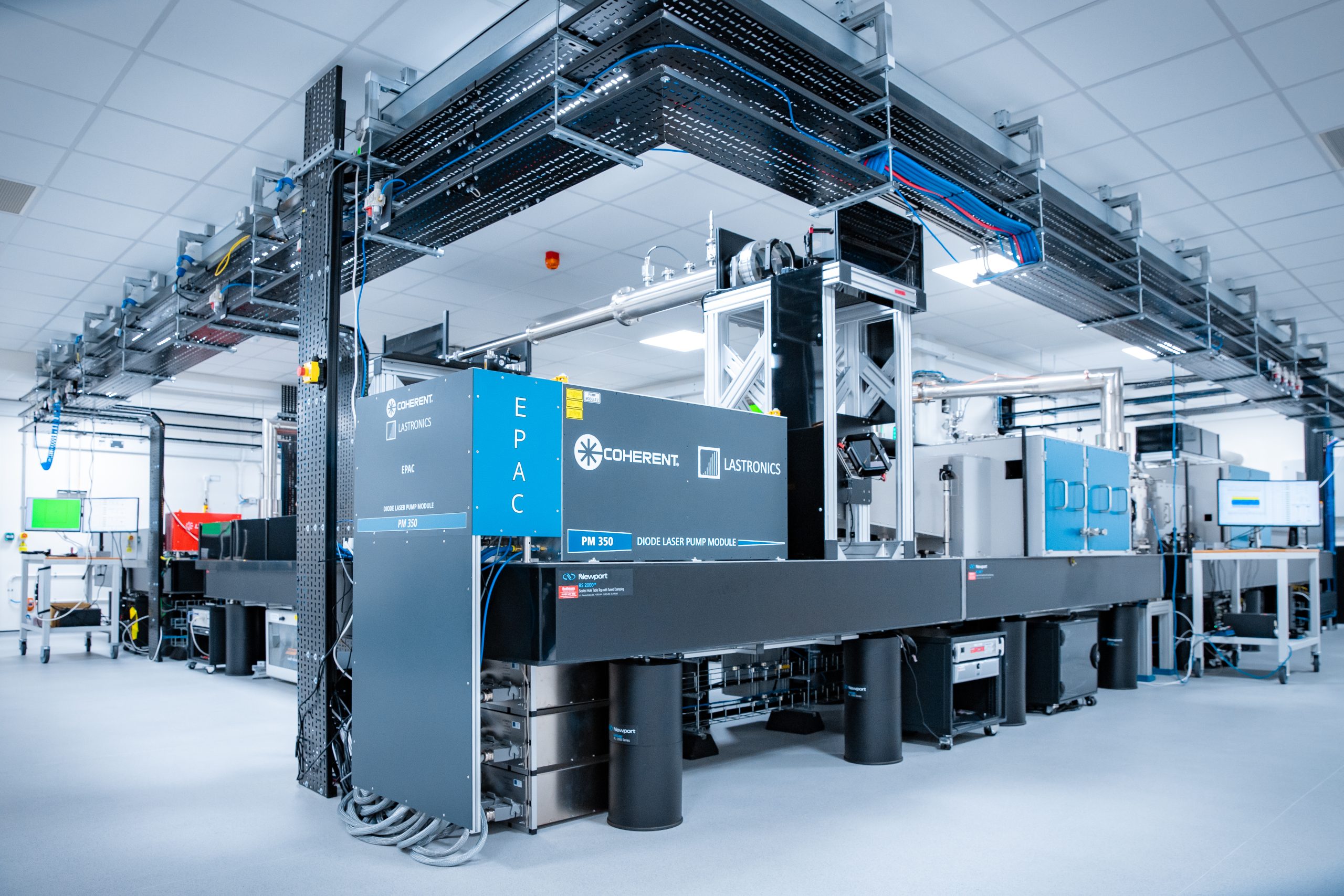
1PW at 10Hz, built upon the CLF’s own DiPOLE technology, delivered to two independent target areas.

Experimental Area 1 (EA1)

  • 20m x 9m applications area in a fixed configuration
  • focusing optic up to 14.3 m focal length (f/65)
  • multi-GeV, LWFA-generated electron beams

Experimental Area 2 (EA2

  • range of experimental configurations
  • short (f/3) and long focus (f/35) geometries
  • X-ray, electron, proton, ion, neutron and muon production

The science behind EPAC

 EPAC can drive bright, beam-like high-energy X-ray beams and beams of high-energy electrons, protons, ions, neutrons and muons by merely changing the target geometry, enabling multi-modal imaging and probing capabilities for fundamental science and applications.
Find out more about the science and technology of EPAC.
Science
EPAC’s technology is based on plasma accelerators driven by high-power laser pulses.
Compared to conventional accelerators, plasmas can sustain much higher electric field gradients within them, reducing the distance required to accelerate charged particles to very high energies by several orders of magnitude as a result. Plasma accelerators, with their extremely high acceleration gradient, hold the promise of realising cheaper, compact accelerators for fundamental science and applications alike, cutting across a multitude of areas in society. Radiation sources produced by laser-driven accelerators are super-bright and “point-like” in space and time, offering a radically different approach that has the potential of major scale size reductions combined with unique capabilities compared to conventional accelerator technology. The UK has been a world-leader in this area, with many of the milestone research and proof-of-principle applications emerging from experiments conducted at CLF. EPAC builds on this expertise.
EPAC will be an exceptional science driver, providing a step-change in capabilities for laser-driven accelerator research in the UK, with multi-GeV electron beams and spatially coherent x-ray and gamma-ray beams for cutting-edge experiments in plasma physics, laboratory astrophysics and condensed matter and material science. The unique capabilities of EPAC, combining near-light speed particles and synchronised ultra-intense electromagnetic fields, would provide a world-leading platform capable of generating extreme states of matter and the tools to probe, control and manipulate them, enabling exploration of some key fundamental questions in nature including those in quantum electrodynamics. EPAC will be the test bed for other plasma accelerator-based facilities worldwide that are in pipeline. There is also potential impact on long term fundamental science programmes, such as the future technical basis of particle physics accelerators, that will likely require this sort of disruptive approach to accelerator science.
EPAC will be driven by a 10Hz Petawatt laser enabled by STFC’s proprietary DiPOLE laser technology developed by CLF. The versatile experimental areas in EPAC can drive bright, beam-like high-energy x-ray beams and beams of high-energy electrons, protons, ions, neutrons and muons by merely changing the target geometry, enabling multi-modal imaging and probing capabilities for fundamental science and applications.
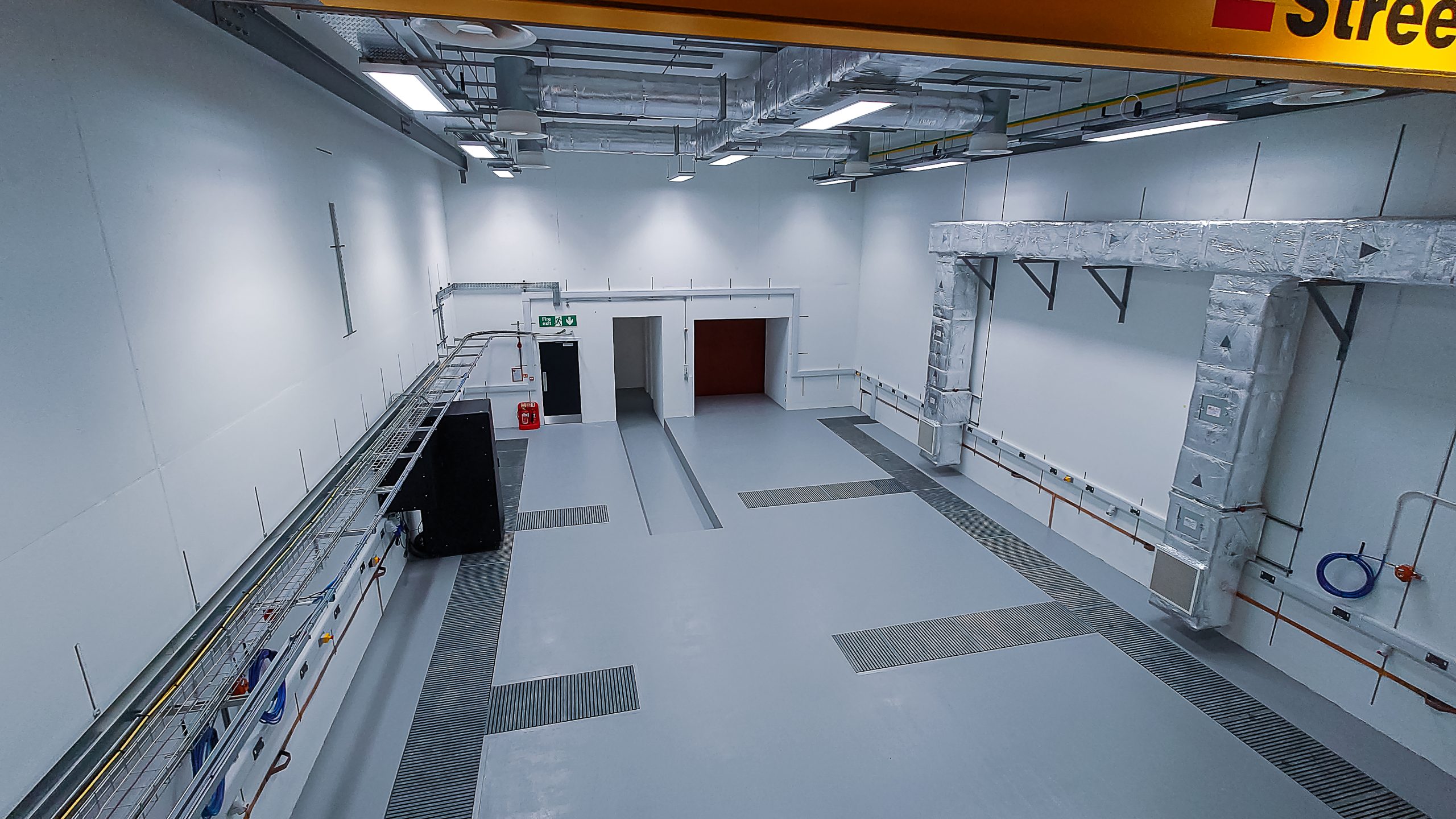
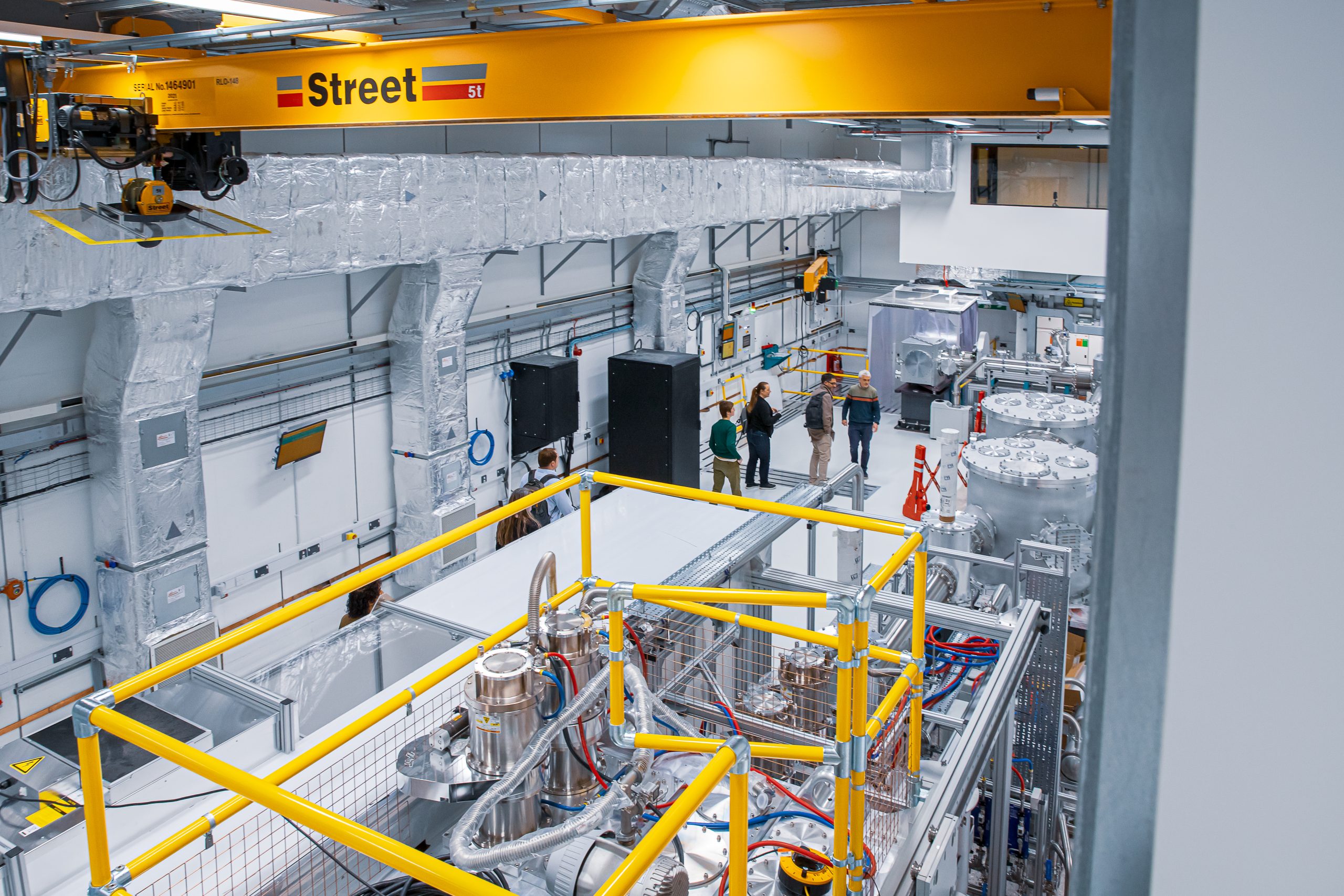
To start with, EPAC will deliver its state-of-the-art Petawatt laser to two independent radiologically shielded experimental areas that complement each other in terms of their scientific capabilities:
Experimental Area 1 (EA1)
Experimental Area 1 (EA1) has a fixed configuration, delivering a long-focus laser beamline  predominantly for driving a laser-wakefield accelerator. Sources derived from the accelerator will be used for experiments and industrial applications in the 20 m x 9 m applications area.

Experimental Area 2 (EA2)
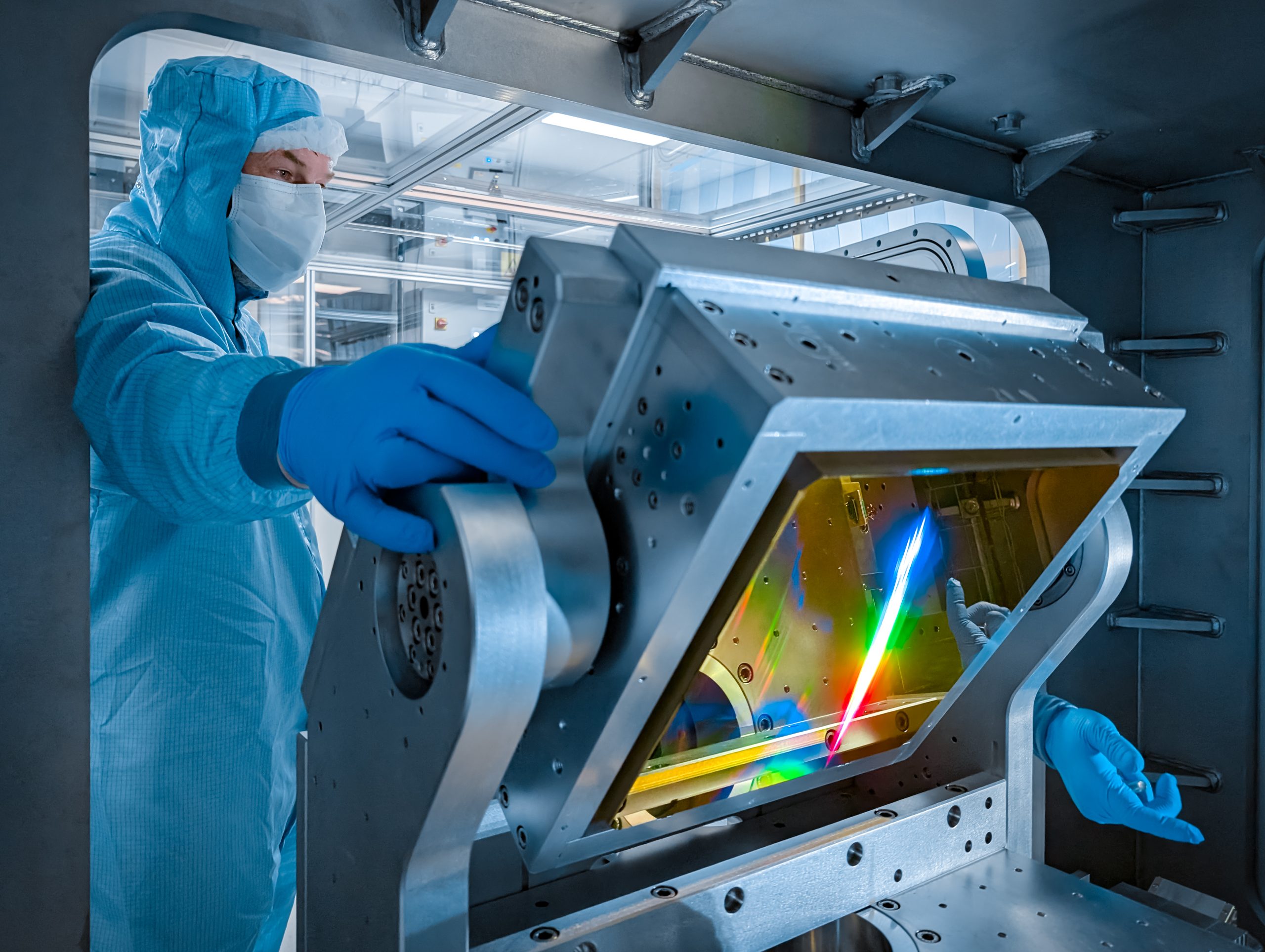
EA2 contains a large vacuum chamber that can be configured in a flexible way with short, medium, and long-focus beamline options. The primary application of the area will be high density laser-matter interactions for optimisation of secondary sources as well as fundamental science studies.

EPAC project timeline

2018

EPAC project conceived and initiated

11 February 2020

Groundbreaking ceremony

2022

Building completion and handover. Laser construction begins

2026 and onwards

First light and laser ramp-up

The future…

EA2 and EA3 beamlines to increase repetition rate towards 100 Hz