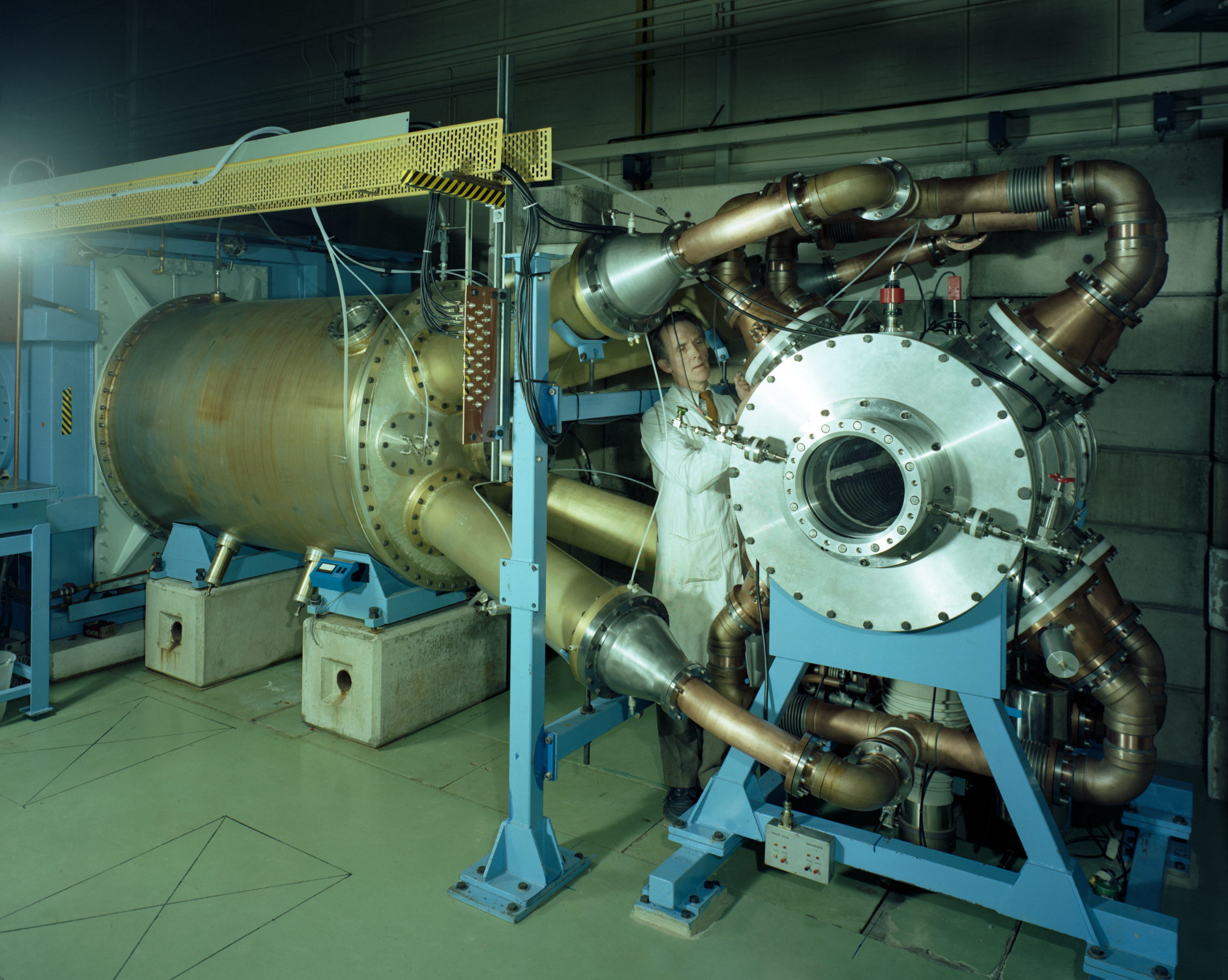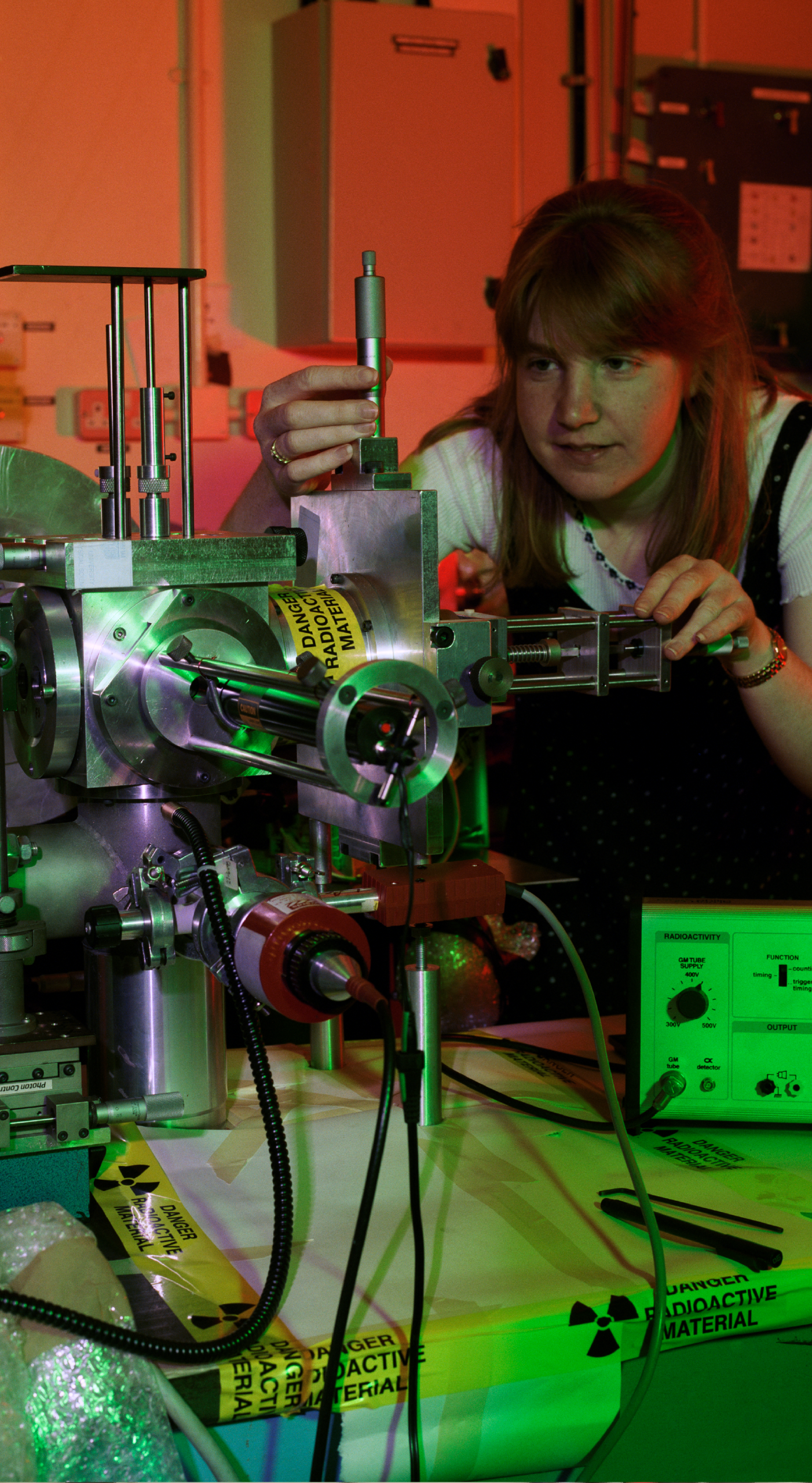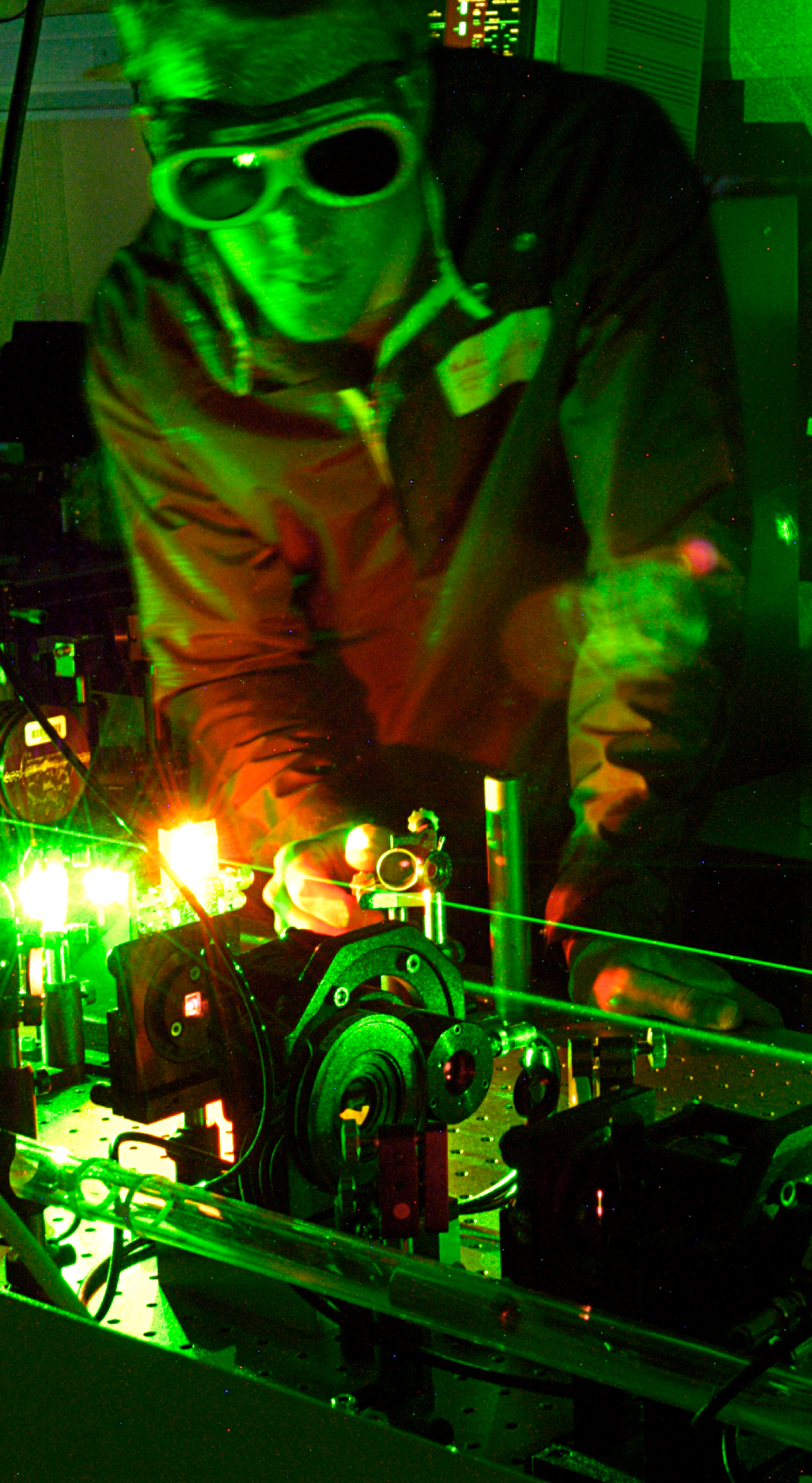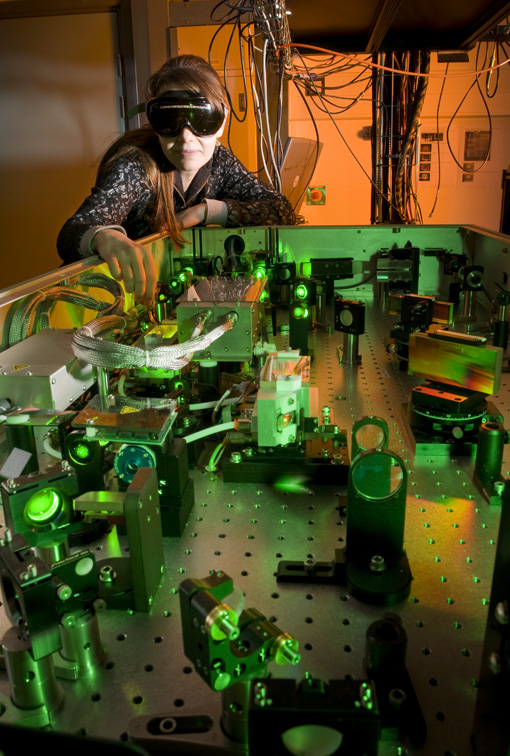
The UK academic community’s argument for centralised laser infrastructure was that it would enable a more advanced and capable infrastructure for the UK than spending an equivalent sum on lesser capabilities at numerous universities, thereby giving us collectively an international edge. From this, came the Central Laser Facility (CLF).
Since that dawn, the CLF has evolved, adding new capabilities in response to changing academic and national priorities, whilst simultaneously sunsetting others to maintain a world leading yet cost-efficient provision for the nation and the taxpayer, always in consultation with our user community.

Constant evolution
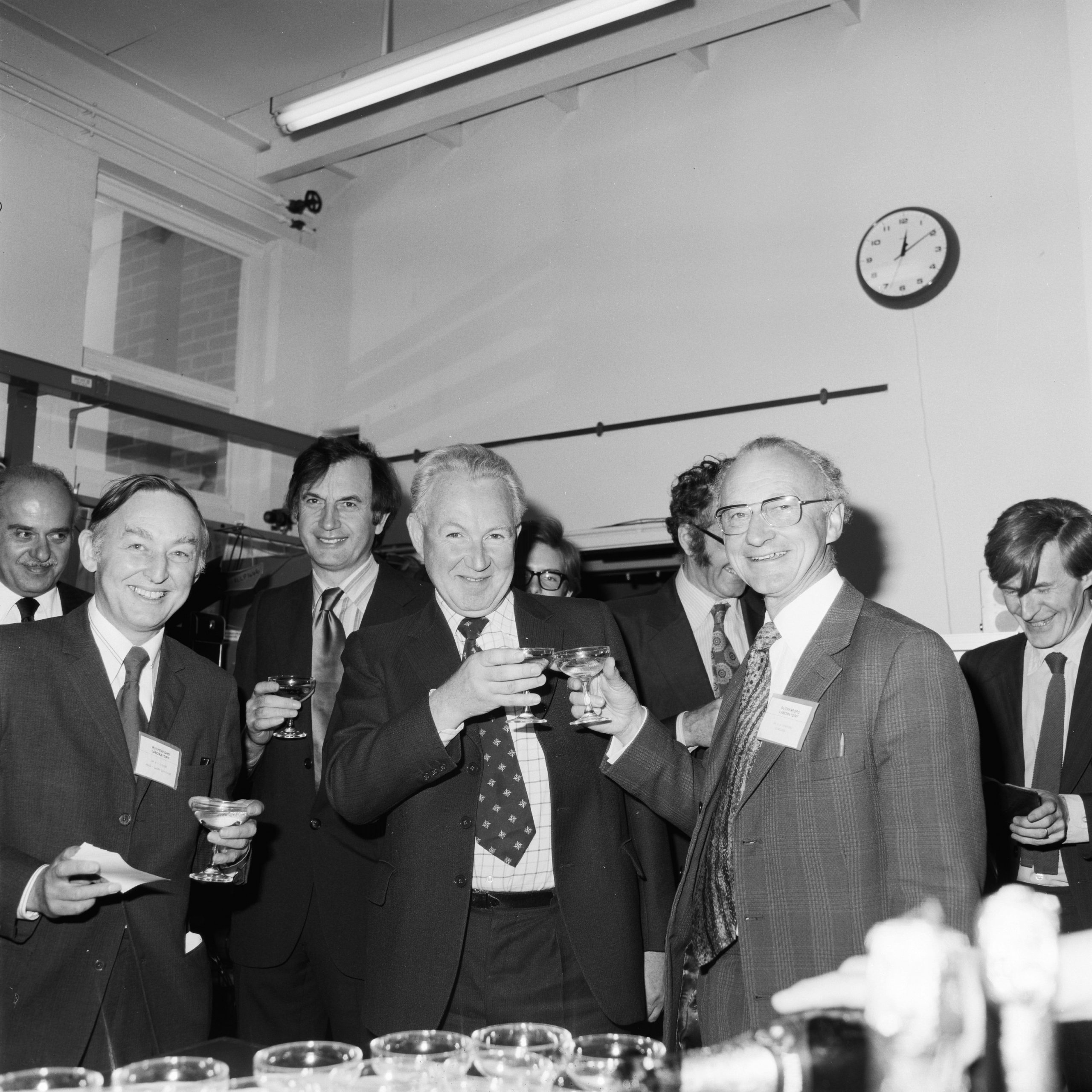
Almost 50 years separate the following photographs, and they are a metaphor for the changes taking place in CLF today. Pictured here is the occasion of the firing of the first Vulcan laser shot in 1977 in the Vulcan Main Control Room.
Left to right: 1st Head of CLF Prof. Alan Gibson, Leading academic Prof. Dan Bradley, SRC Chairman Sir Sam Edwards, Rutherford Lab Director Godfrey Stafford.
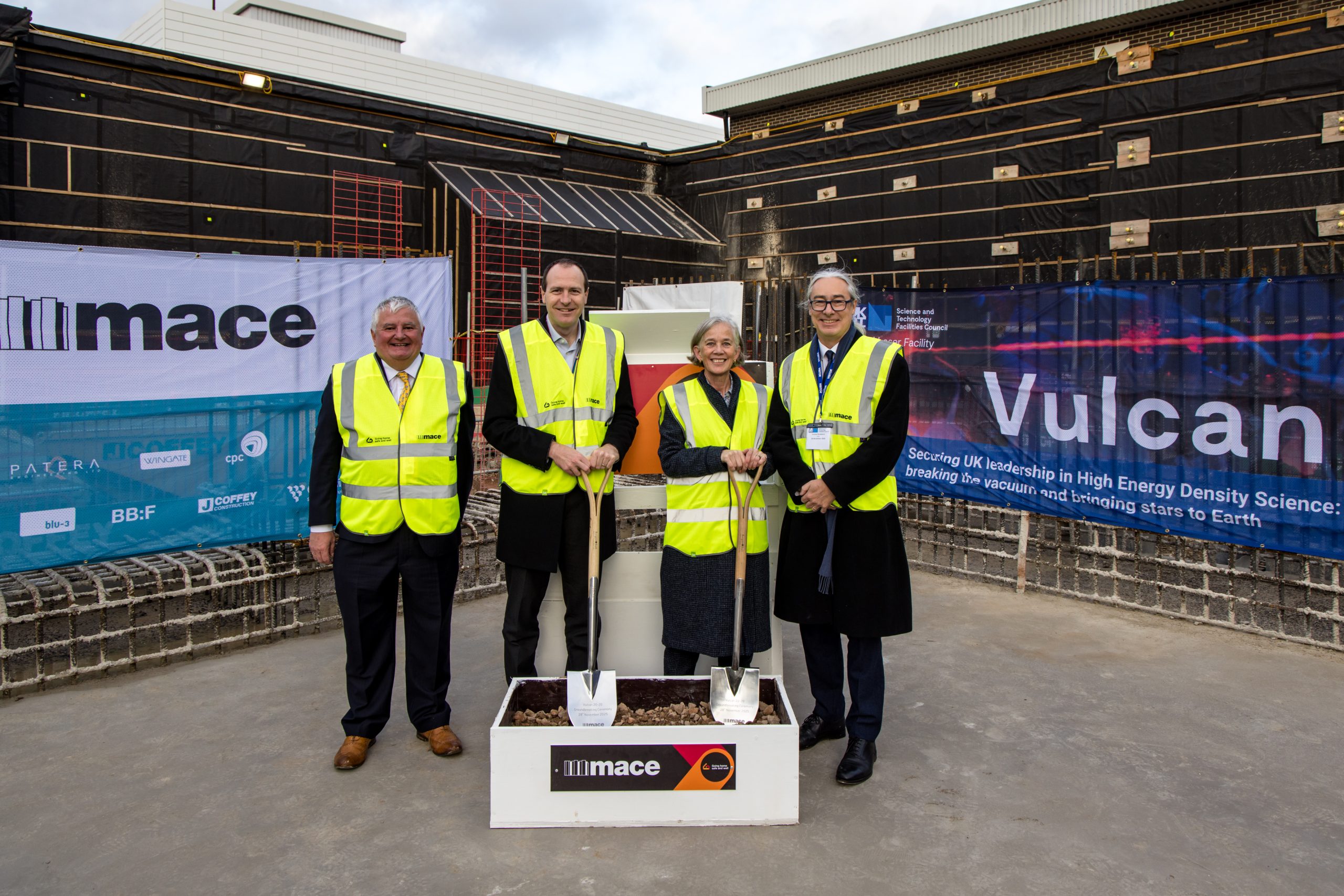
The 2025 groundbreaking for the Vulcan 20-20 Project on the site of the demolished east and west Vulcan target areas. Vulcan 20-20 will be one of the most intense lasers ever constructed and will provide us with unique opportunities to advance our understanding in a number of scientific areas, with applications in both academic research and industry.
Left to right: 6th Head of CLF Prof. John Collier, UKRI CEO Sir Ian Chapman, HMG Chief Scientists Dame Angela McLean, AWE Exec Director of Science Prof. Andrew Randewich.
Today, UK Research and Innovation (UKRI) is investing in the modernisation of the CLF, bringing new, modern, future facing facilities online that are aligned to the UKRI strategic mission whilst simultaneously sunsetting time served CLF infrastructures.
Strategic alignment to the Research Councils, either in the form of UKRI as now or its predecessor arrangements have always been a priority in our development, with a consequence that:
Around 70% of academic experiments conducted in CLF are supported by Research Council grants.
This approach has also enabled a wide range of timely innovations feeding directly into the economy and the CLF stands out within STFC for its patents, licensing, invention disclosures and spinouts. To gain a better understanding of the CLF’s impact, reputation and global reach in the last decade, a socio-economic impact study was conducted by an external specialist company.

Current Strategic Investments
The advent of UKRI has provided a step change in opportunity to completely transform much of CLF's aging infrastructure, positioning the UK with pioneering and forward-facing capabilities for the coming decades. This enables a scientific leap forward for the academic community, as well as incorporating greater capacity to meet the increasing needs of industry and other agencies of the state. These investments are well aligned to UKRI's new funding model, enabling a balance of curiosity driven research, impact on HMG's Industrial Strategy including defence and national security and support for the growth of companies and industry.
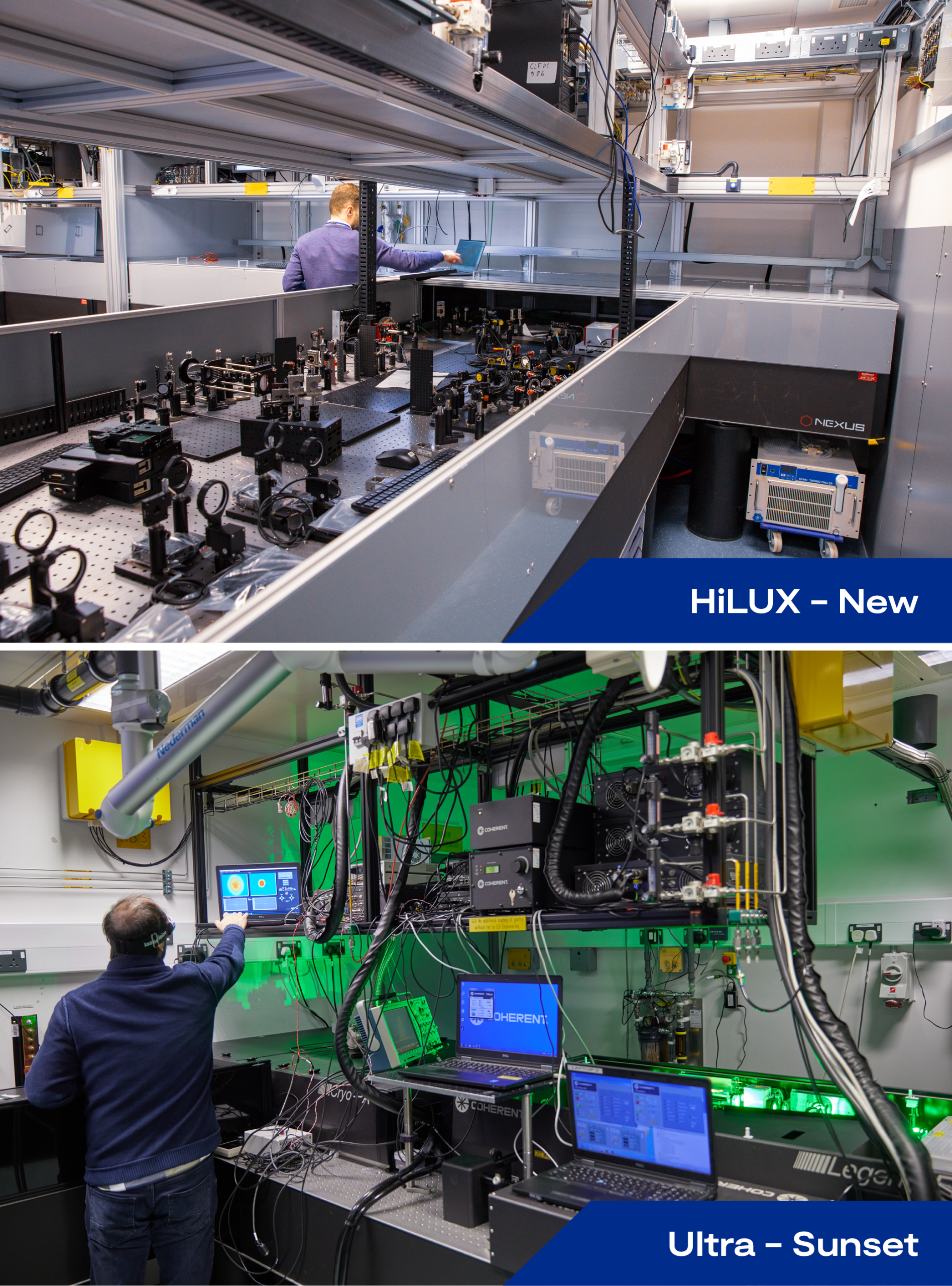
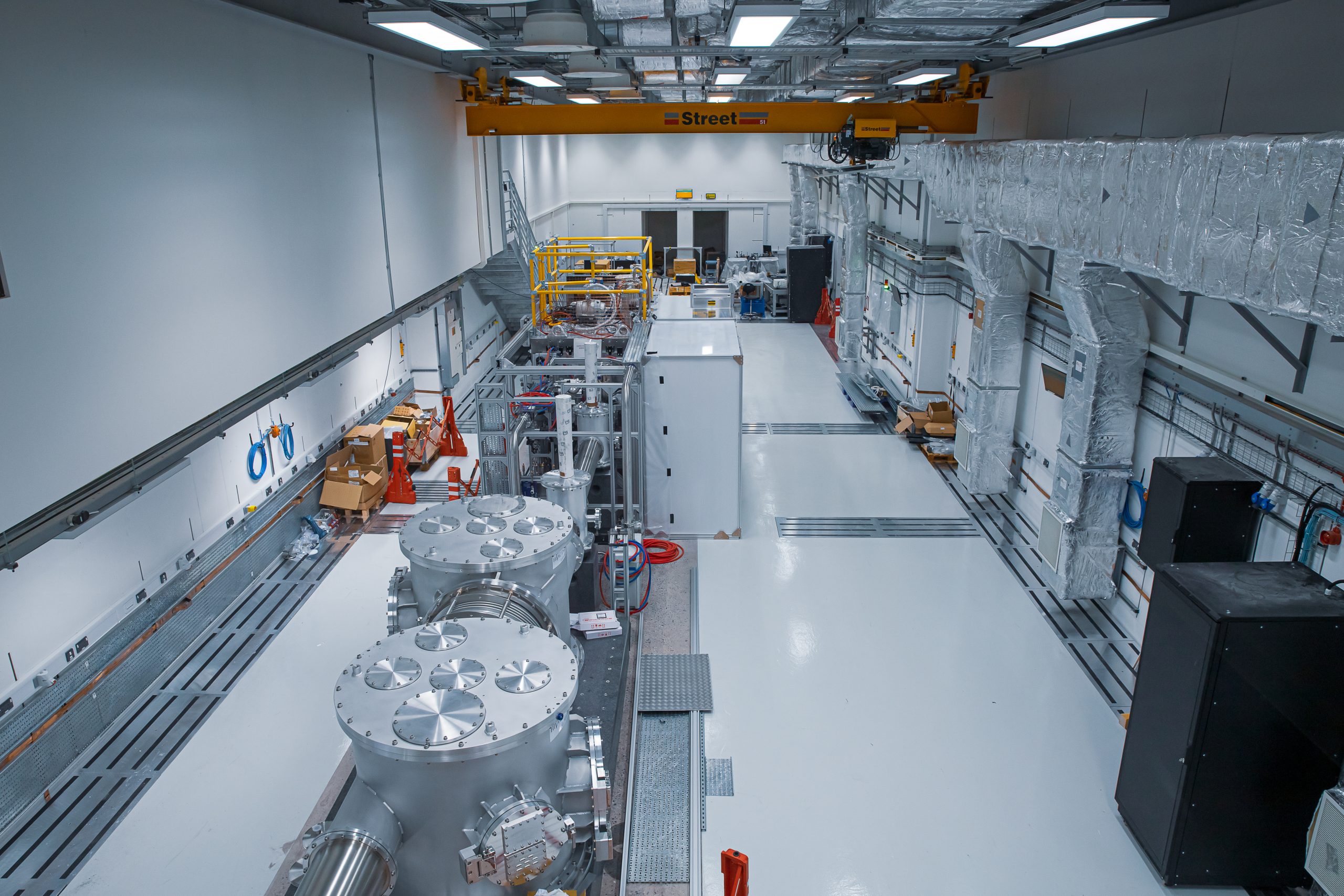
HiLUX will provide a world leading capability for time resolved and vibrational science.
HiLUX is an investment from the UKRI Infrastructure Fund to establish a world leading capability for time resolved and vibrational science.
Most physical, chemical and biological processes in life, nature and modern technology are dynamic in character i.e. they change with time, often on timescales that are extremely rapid – picoseconds or femtoseconds. HiLUX, which will be globally unique, will enable these to be studied with exquisite detail and sensitivity, peeling back the subtle step-by-step inner workings of how “things” happen that would otherwise be hidden in time aggregated measurements. Example impact areas include ultrafast device physics and chemistry, biomedical diagnostics, industrial biotechnology, drug discovery, advanced materials, quantum technologies, catalysis, batteries and energy research.
What is sunset?
HiLUX will replace the CLF’s Ultra facility which has already been partially sunset to make way and will be completely sunset when HiLUX is fully commissioned in 2028. HiLUX also provides a key systems upgrade to the Artemis facility, essentially replacing old beamlines with state-of-art-capabilities. HiLUX is being constructed within the same physical footprint of the Ultra and Artemis systems in building R92 (formerly the Research Complex at Harwell). The design of HiLUX enables the independent operation of four end stations providing much greater capacity for the industrial exploitation of the facility alongside its academic use.
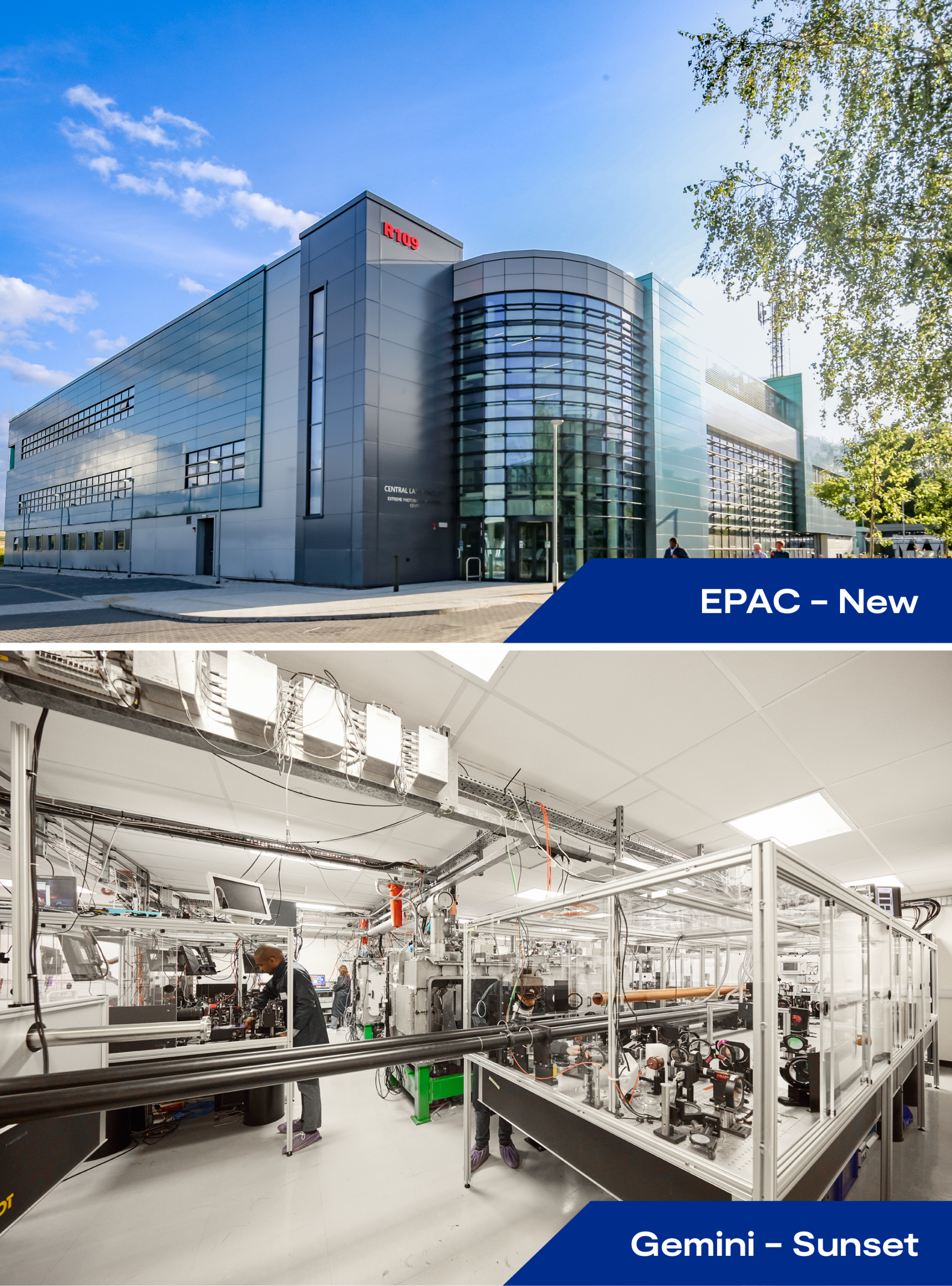
The Extreme Photonics Applications Centre (EPAC) will be a state-of-the-art centre for the development and exploitation of laser-plasma based accelerators
EPAC is combining investment from the UKRI Strategic Priorities Fund, STFC and the Ministry of Defence to establish a state-of-the-art centre for the development and exploitation of laser-plasma based accelerators. Plasma based accelerators have unique properties and acceleration gradients some 10,000x greater than century old conventional radiofrequency approaches, of which there are around 30,000 globally. They therefore have the potential to dramatically impact all sectors where conventional accelerators are used: from understanding the building blocks of the universe to applications in medicine, industry and defence, providing disruptive capabilities.
What is sunset?
EPAC is the successor facility for the CLF’s current Gemini facility (switched on 2008) which will be sunset once EPAC starts operations, expected in 2027. EPAC is built on a new site close to the existing CLF and once Gemini is decommissioned, its existing building R7 dating back to the origins of RAL will be demolished to make way for new STFC functions. Capacity and function have been built in for academic, industrial and national security & defence use.
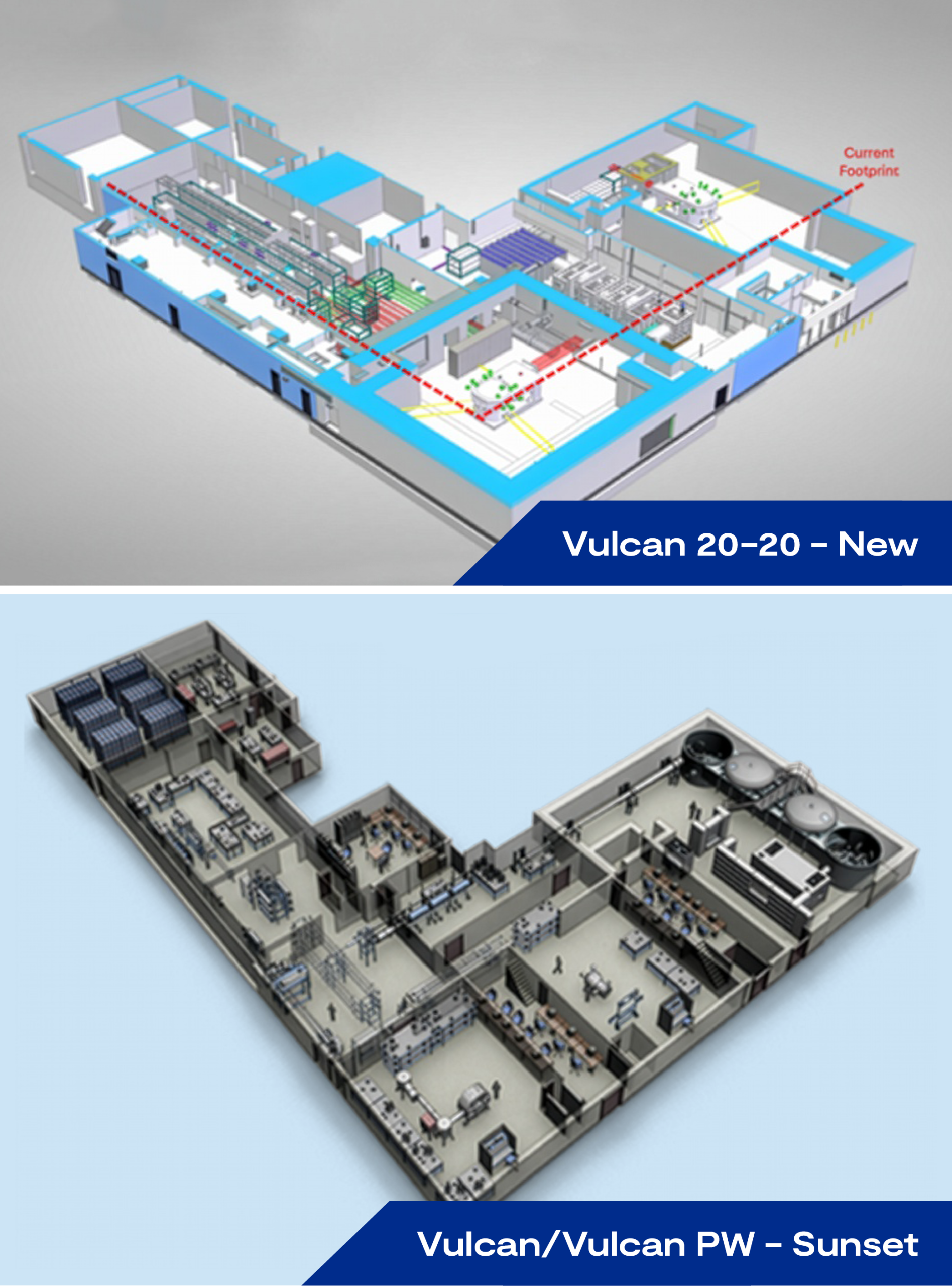
Vulcan 20-20 will offer a world leading capability for high energy density (HED) science.
Vulcan 20-20 is combining investment from the UKRI Infrastructure Fund, STFC and AWE Nuclear Security Technologies to establish a world leading capability for high energy density (HED) science. HED science studies macroscopic amounts of matter placed under extreme conditions, such as temperature, pressure, density, electric field, magnetic field etc. These are conditions usually only found off planet, for example in the sun or at the centres of gas giants. As a result, it can be used for fundamental research on the behaviour of matter in these extreme environments, or for technological research for example novel approaches to fusion energy or novel materials.
What is sunset?
Vulcan 20-20 is the successor facility for the original Vulcan (1977) and Vulcan PW (2002) facility which have already been decommissioned for this development, parts of which date back to the original 1977 system. Vulcan 20-20 is being built on the same site as the decommissioned Vulcan via an expansion to the R1 building rather than a green field site to reduce costs and preserve existing support infrastructure. Capacity has been built in for academic, industrial and national security and defence use.
Investments in Octopus continue to build the premier bio-imaging capability in Europe.
The Octopus National Imaging Facility offers access to a portfolio of unique, world leading, bio-imaging solutions to UK academics, UK industry and international partners. Octopus was constituted to provide imaging solutions for the biomedical sciences, encompassing technology that integrates from the molecular to the organism level. Octopus solutions have also proven to be transformational when applied to material science research. Octopus is already a modern facility and successive investments by STFC, MRC, BBSRC and the UKRI International Strategic Partnership Fund over recent years have ensured that this is the premier bio-imaging capability in Europe. Bio-imaging is a fast-moving field and as new instrumentation is developed and / or brought online by CLF and its partners, old capabilities are naturally sunset.
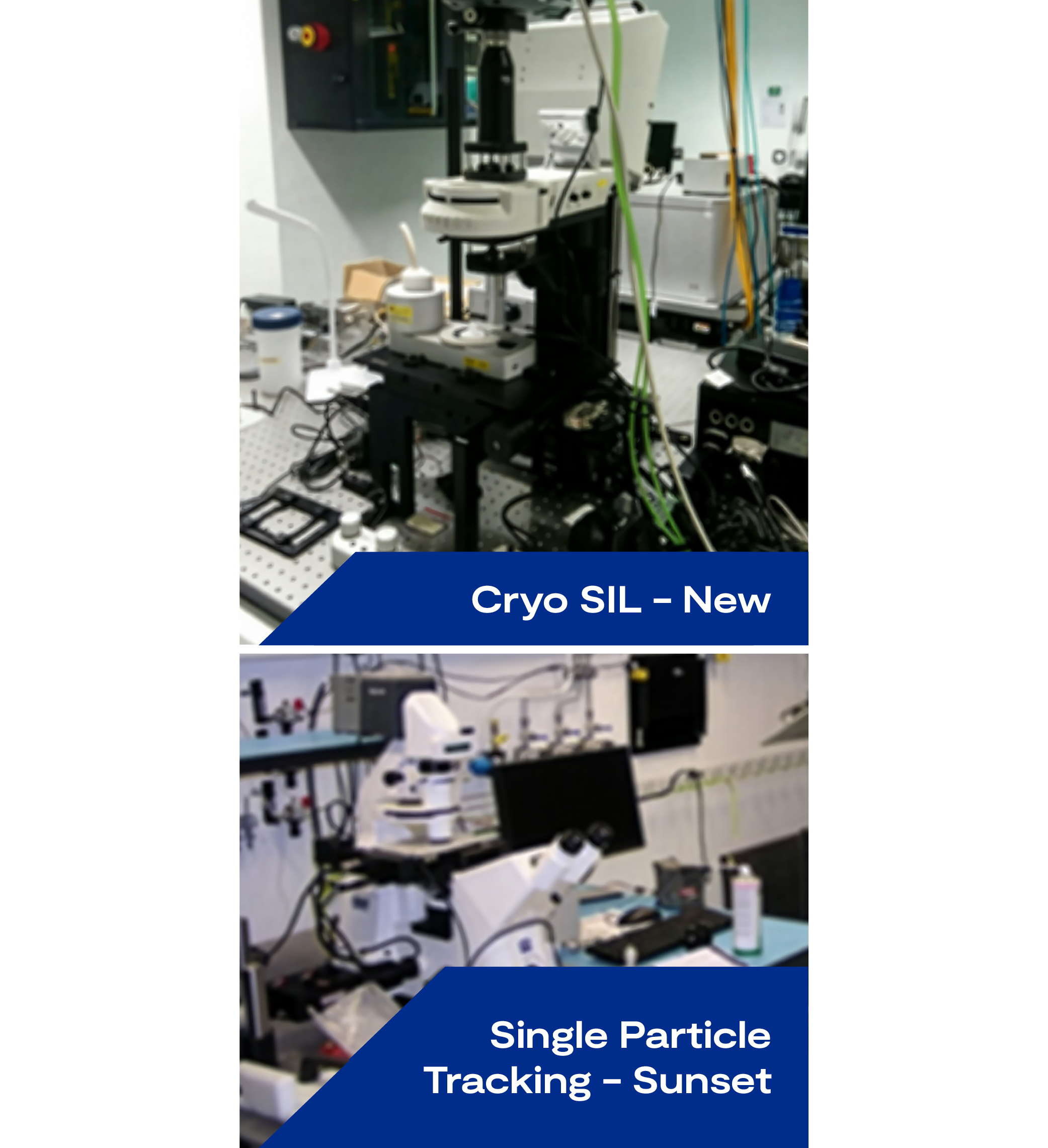
The Pictures show an example of Octopus system retirement, where cryogenic solid immersion lens (SIL) microscopy in the CLF replaced single particle tracking microscopy which was sunset. Both systems were developed within the CLF.
Timeline
Learn how the CLF has developed as the UK’s hub for laser science.
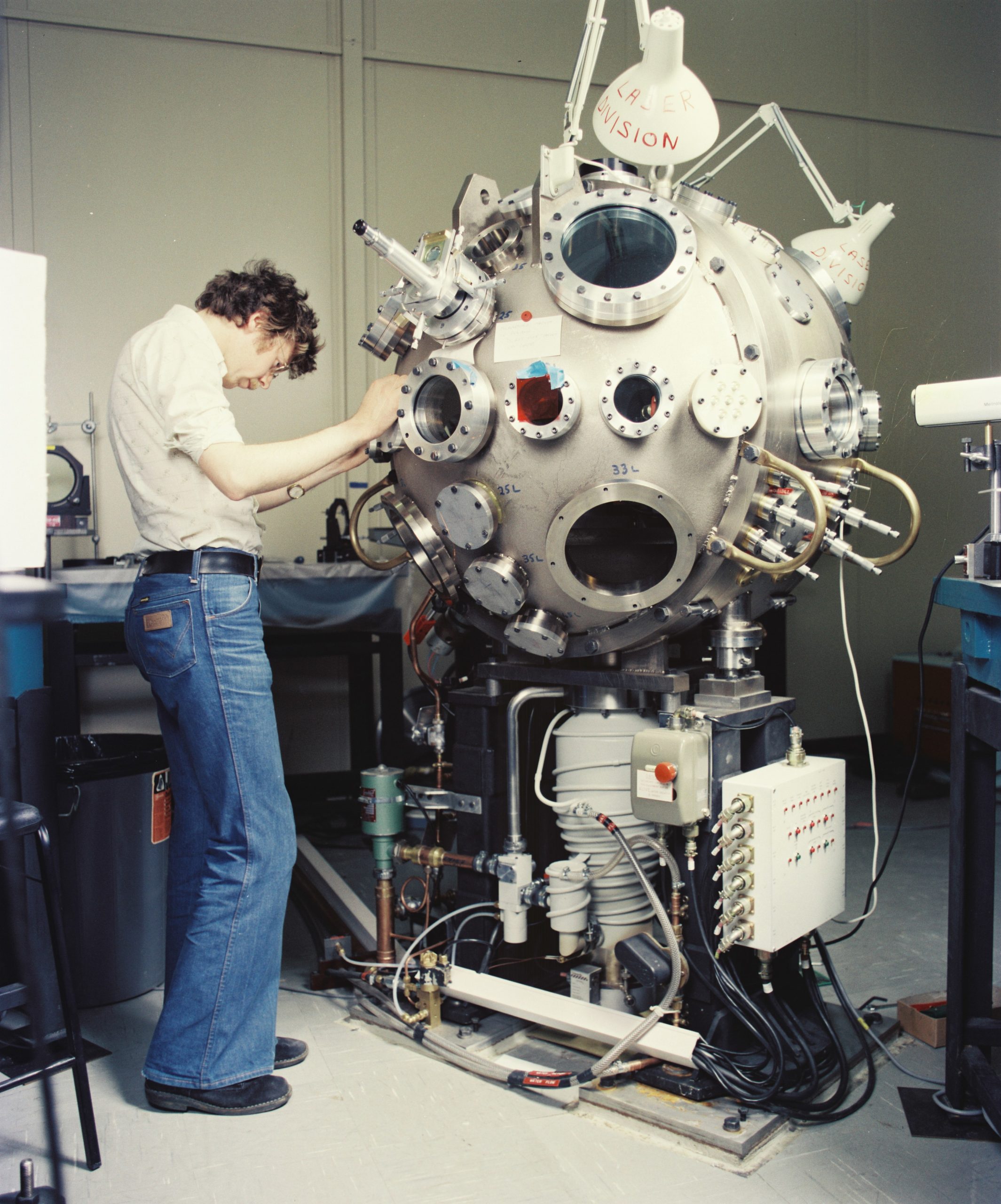
In the 1970s, a national strategic requirement for high power laser program resulted in the formation of the CLF.
In 1977, the CLF welcomed its first users on the Vulcan laser, which was completed in the same year.
The UV laser programme for early UK inertial fusion studies began, and the ELF: UV laser completed.