Each year the Central Laser Facility welcomes a number of sandwich students to work as part of various teams across the department. The scheme offers undergraduates the opportunity to take a year out of their degree to gain experience of working life.
As the Science Communication sandwich student, I was able to sit down with a handful of this year’s cohort of sandwich students to discuss their time here so far. It has been an enriching experience to explore the diverse nature of the jobs that they are doing, especially to see the students making valuable contributions to the cutting-edge research being done at the Rutherford Appleton Laboratory.
Student Profiles
- Emerald Dilworth is studying Mathematics at the University of Bath and is working as part of the Vulcan Laser Operations team.
- Akash Dasgupta is a physicist from the University of Bristol working as part of Ion Acceleration for Medical Purposes within Vulcan.
- Asha Patel is studying Mathematics and Physics at the University of Leeds and is working on the Gemini Laser Target Areas.
- Rupert Eardley is studying Physics and Astrophysics at the University of Bath and works as Laser Scientist for CALTA.
- Amelia Newton is completing her Master’s degree in microbiology from the University of Liverpool as a sandwich student, with the University of Oxford advising upon.
- Léna Jlassi is studying Physics and Astrophysics at the University of Bath and is working within the Vulcan Target Area team.
“What do you do in your job?”
EMERALD: I help with the day to day running of the Vulcan laser, providing what the users require and coordinating with the target area. My job also extends to trying to improve the laser. A large project we are looking to start is working on a test compressor that will sample the beam at the start of its journey and predict what will happen at the end – essentially running diagnostics.
AKASH: The work I’ve been doing has been to do with cameras that are used as diagnostic tools. When we do experiments at Vulcan, the laser beam is shot at a target and you get lots of things that come off from the target, like x-rays and terahertz radiation. Cameras come into it as they’re part of the suite that probes the radiation. Later on I should start working on focal plane imaging once the laser is running.
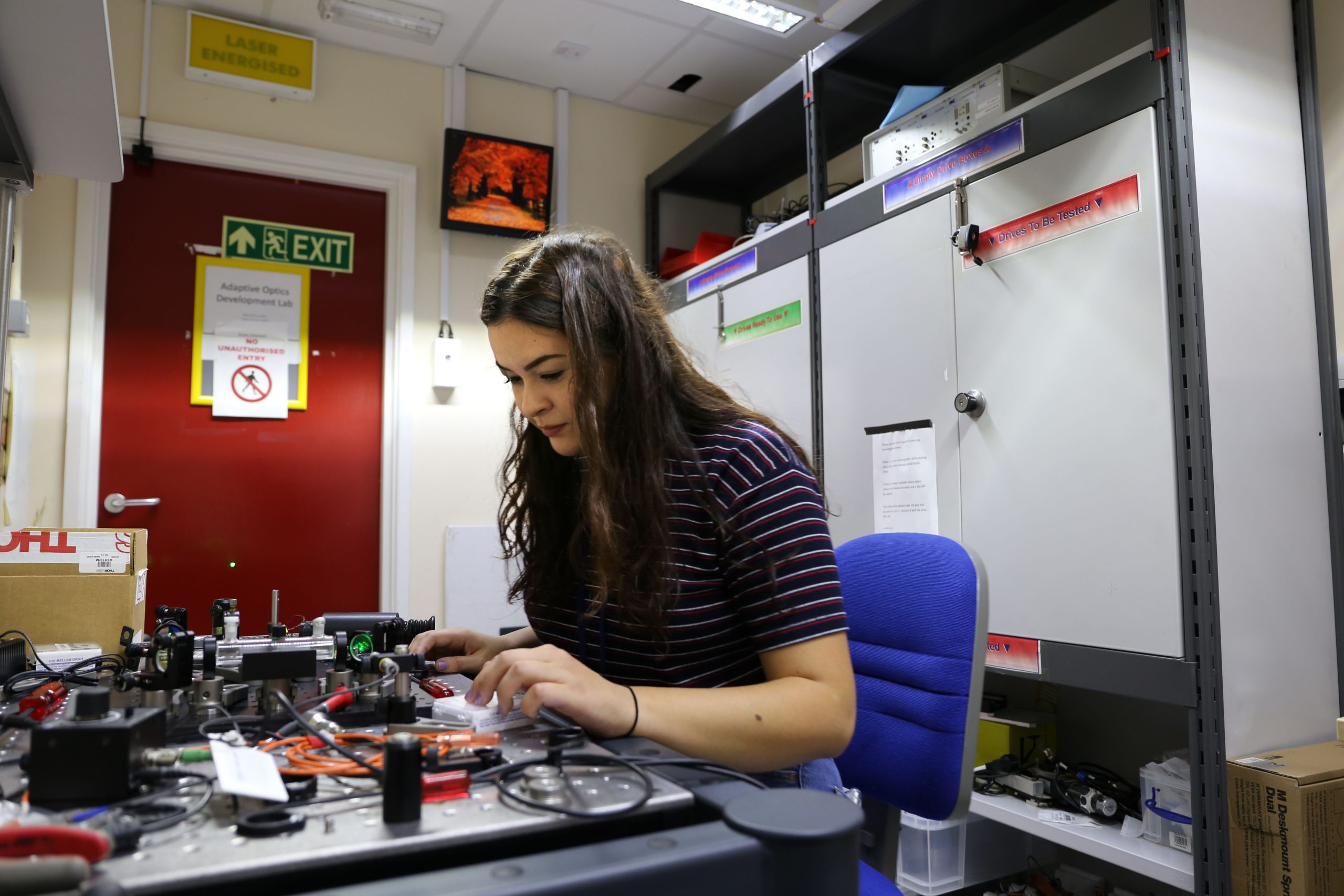
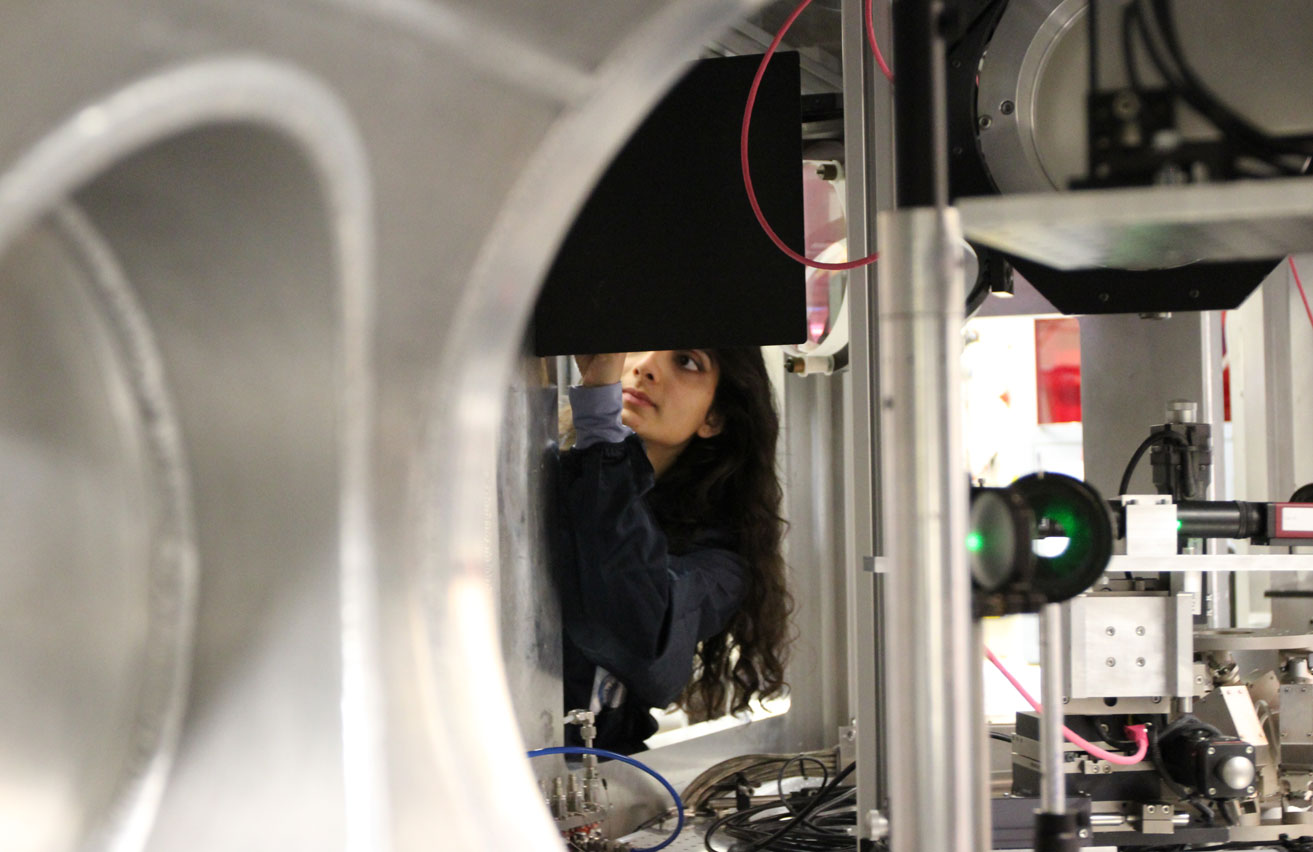
ASHA: I work on the Gemini Laser Target Areas, which involves a variety of tasks such as building systems to be used in the target chambers for experiments, aligning lasers and optics and writing code for data analysis, but I am yet to start my own project.
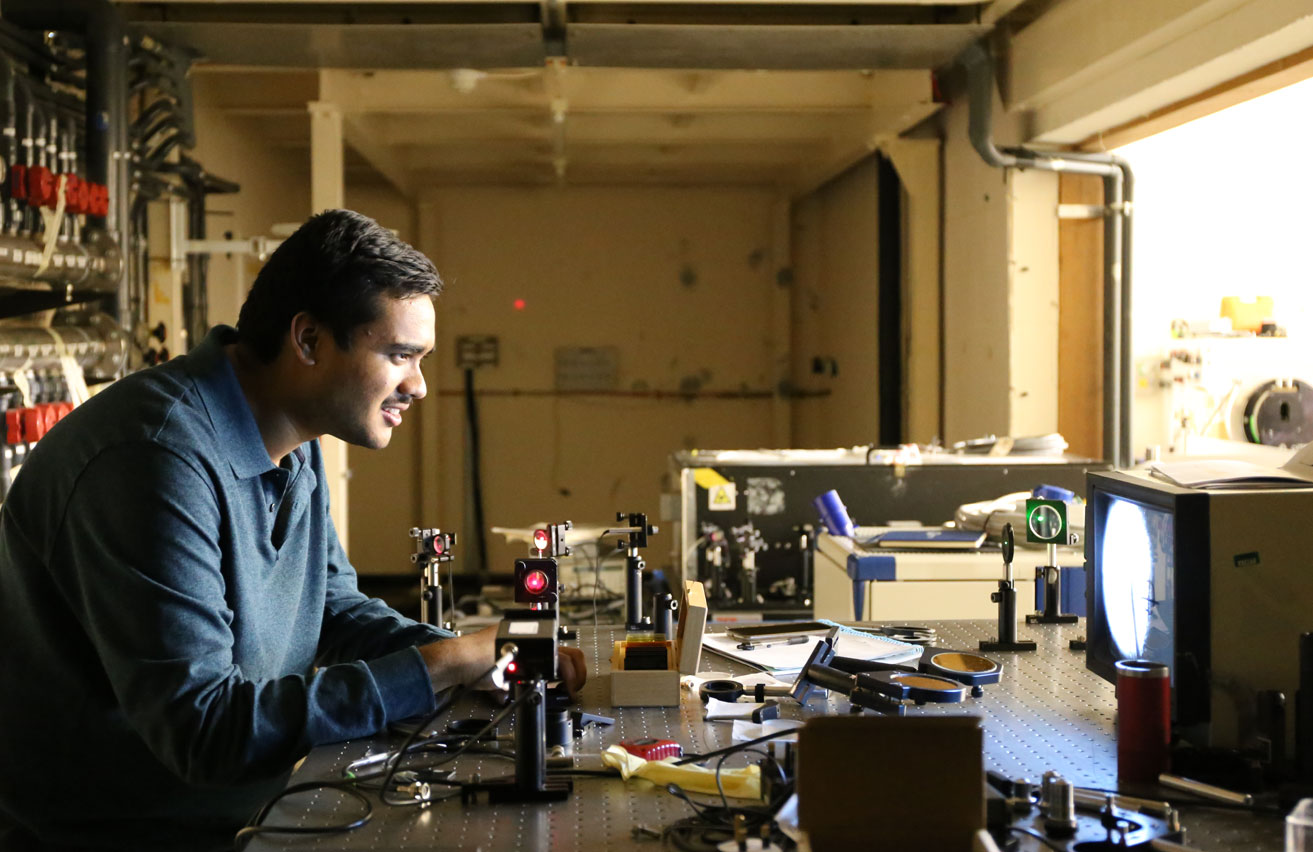
RUPERT: My project is the development of a new technique conceptualised by a colleague. Currently this involves constructing a model of the laser system, calibrating it with experimental data and modifying it to predict the outcome of a future campaign. I also work on implementing and testing a new temperature diagnostic on the D100X laser system as well as assisting in other aspects of the construction and testing of the system.
LÉNA: We have users that come in to the target areas and I help them conduct their experiments be that either finding equipment or running diagnostics. I also have projects which I do on the side, both long term and short term. For instance, I’ve been doing some programming in MATLAB as well as more practical projects involving optics.
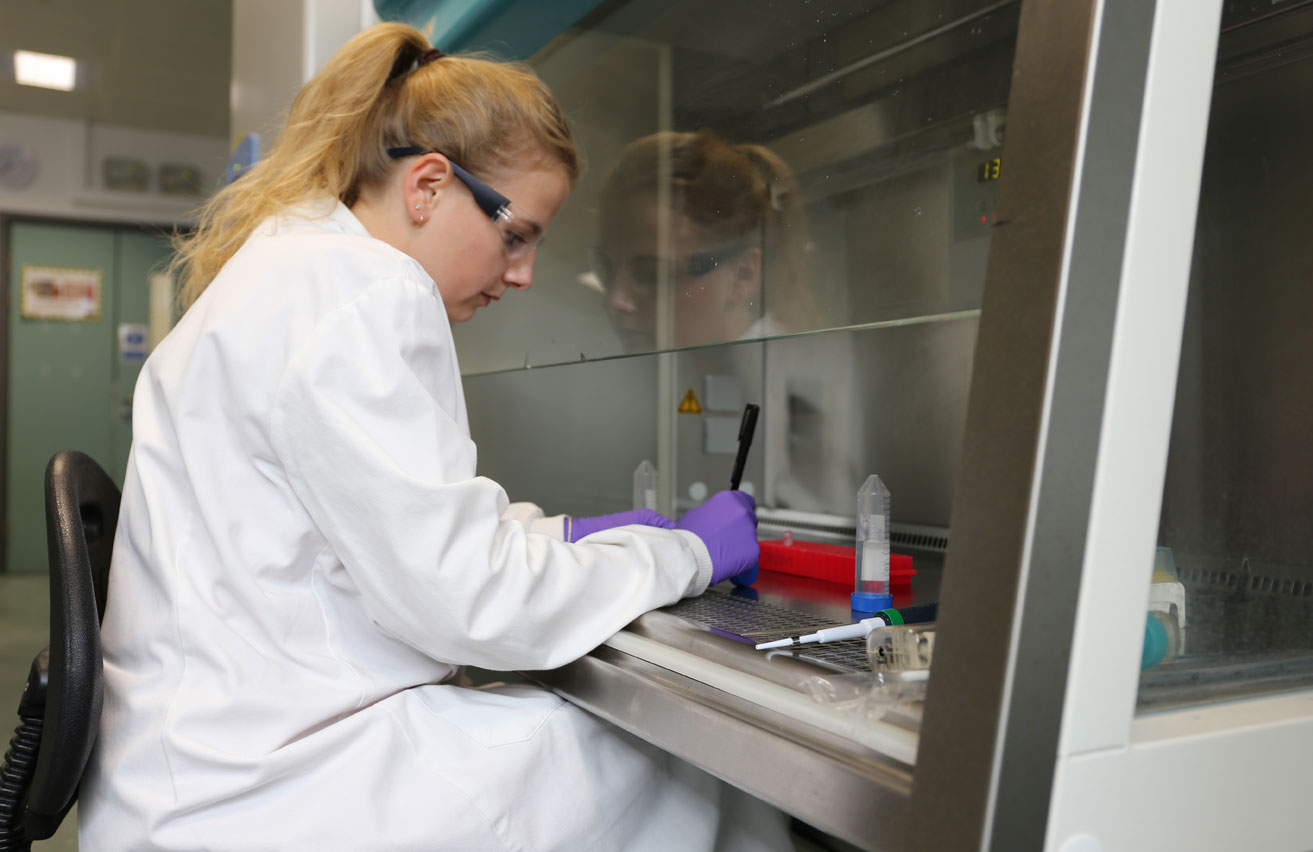
AMELIA: I work in the Research Complex at Harwell, looking at Rhodobacter sphaeroides bacteria. I use a variety of laser imaging techniques to investigate the internal organisation of the bacteria and how these changes affect the diffusion rates of intracellular molecules.