Technical specifications
Artemis has two high-repetition rate and high average power femtosecond laser systems, three vacuum beamlines for XUV generation and filtering, and four end-stations for user experiments.
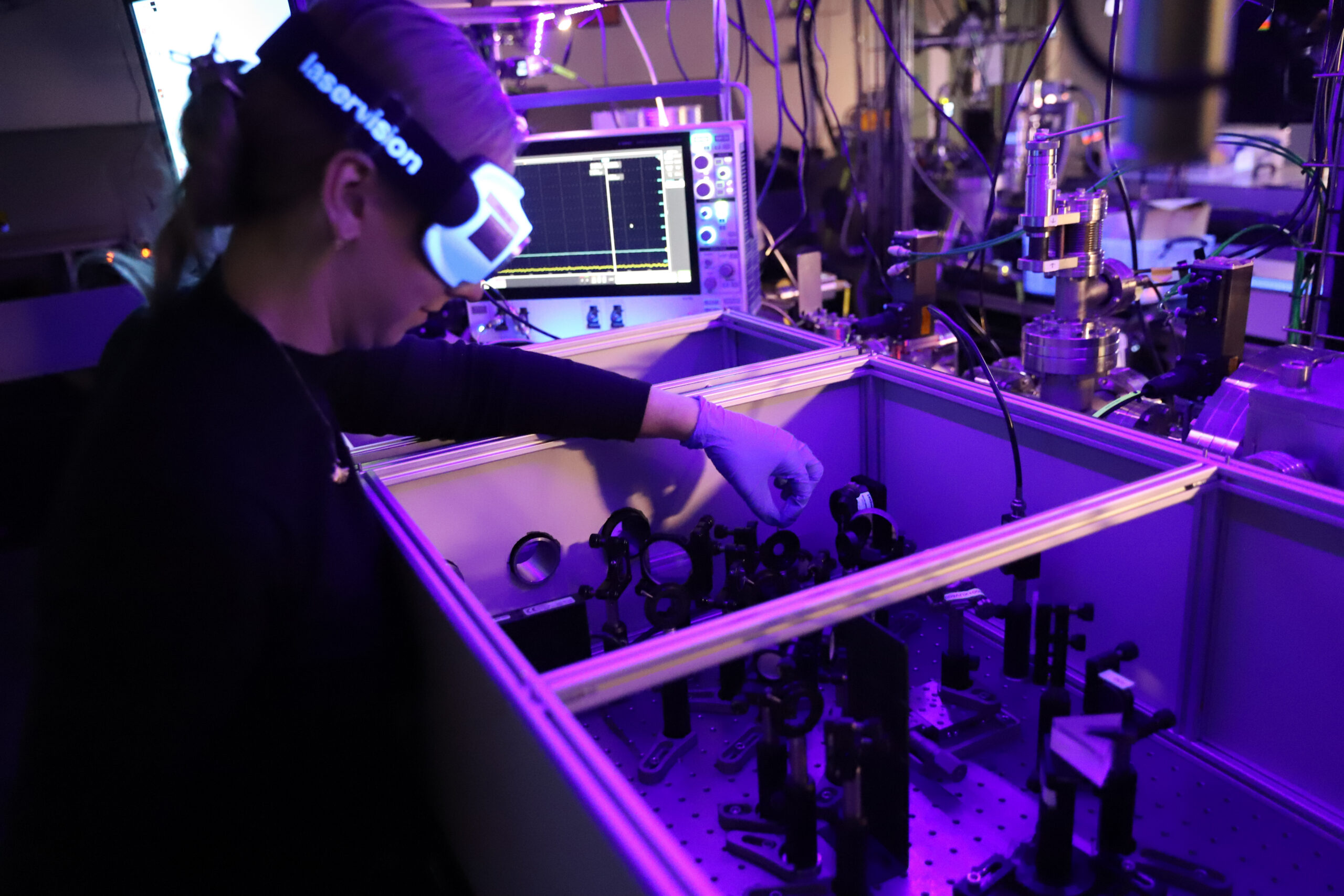
The specifications are:
Three vacuum beamlines for XUV generation, wavelength selection and focusing.
The end stations are:
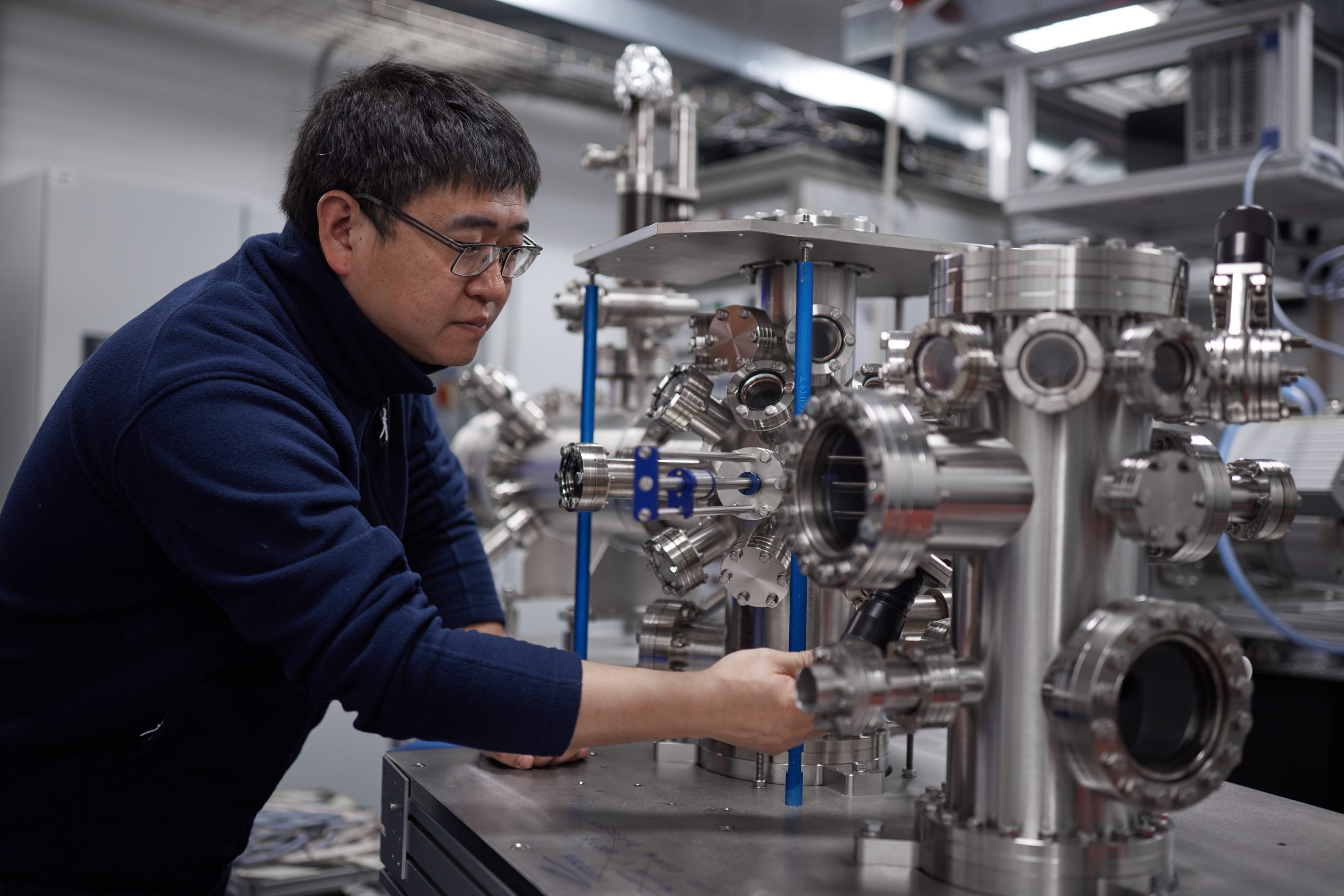
Experiments on Artemis use high harmonic generation (HHG) to investigate ultrafast dynamics in experiments on gas, liquidand solid materials. The spatial coherence of the XUV radiation is also leveraged to perform coherent diffractive imaging techniques. Artemis is based on high-repetition rate, widely tuneable femtosecond laser sources, and ultrafast XUV (10 to 150eV) pulses produced through HHG. The facility comprises two ultrafast laser systems and three in-vacuum XUV beamlines, with four specialised end-stations to support user experiments.

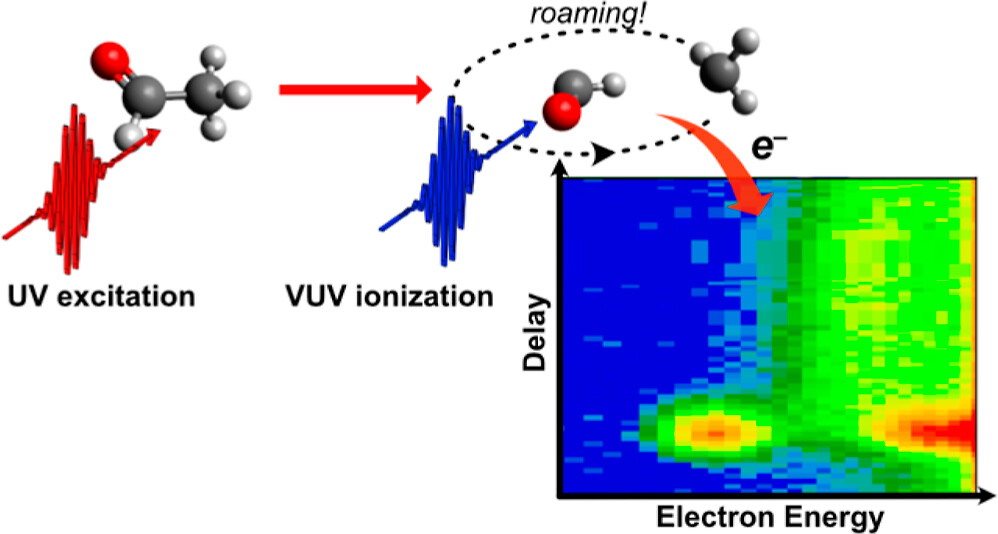
In the atmosphere, sunlight triggers photochemical reactions that can breakdown chemicals to form new products or free radicals. Recent experiments on Artemis have studied several molecules that are atmospheric pollutants, using ultraviolet pulses to initiate the photochemical reaction and then XUV to study its evolution in time and final photoproducts.

Light harvesting devices need to combine strong absorption in the visible spectral range with efficient ultrafast charge separation. Artemis can directly measure change in electron populations, to obtain information on the charge separation and recombination times.
The recombination pathways of charge carriers are also important to photocatalysis because they determine the lifetime of chemically active sites and hence the catalytic efficiency.
New emergent phenomena often arise from the competition or cooperation of electronic phases in quantum materials. Understanding them can guide the design of novel material functionalities, such as unusual electronic properties.
2D materials have the potential to result in devices that are smaller, run faster, and consume less power, as well as offering a wealth of other potentials such as foldable, flexible, transparent electronics.
In 2013, the first direct measurements of ultrafast electronic dynamics in graphene, recognised as the world’s first 2D material, were made using Artemis.
The resulting papers now have over 1,000 citations between them.

The high degree of control over the electronic properties and strong light-matter interactions in semiconducting TMDCs make them promising candidates for novel applications in photonics, optoelectronics and spintronics. For example, we can use laser pulses to switch the material from an insulating state to a metal state, on a sub-ps timescale, and directly measure the change in electronic band structure while this happens.
Artemis has two high-repetition rate and high average power femtosecond laser systems, three vacuum beamlines for XUV generation and filtering, and four end-stations for user experiments.
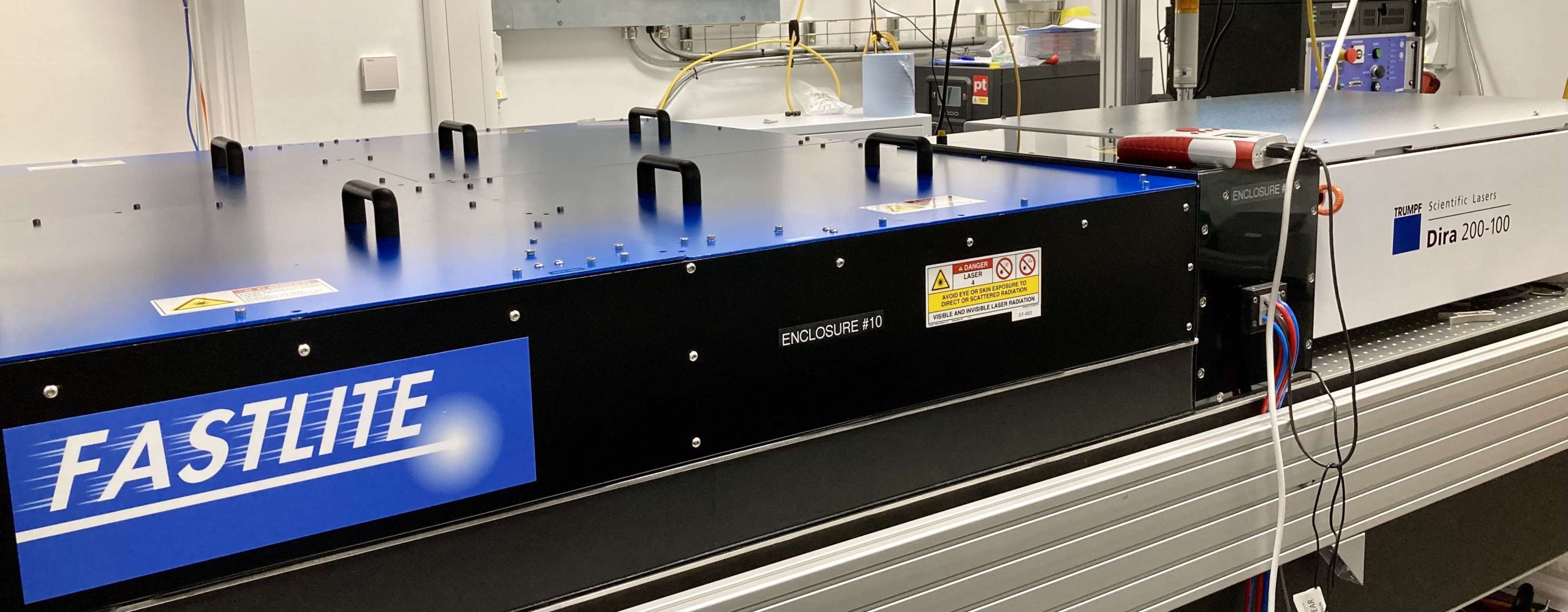
System 1 is a 100kHz infrared laser system from Fastlite, producing >20W (200µJ) in 50fs pulses at 1700nm, and >5W in 60fs pulses at 3000nm. The system is based on Optical Parametric Chirped Pulse Amplification (OPCPA), pumped by a 225-W Yb:YAG thin-disk regenerative amplifier from Trumpf Scientific, based on an industrial micro-machining system. The OPCPA has two modes of output. One offers <50fs pulses at 1700nm and <60fs pulses at 3000nm, and the other offers broader tuning ranges (1,430 to 1,850nm and 2,330 to 3,680nm) but slightly longer pulses (80 to 180fs).
The system also has a multi-pass Herriott cell to generate short pulses at 1030nm to be used for high-harmonic generation (HHG). Alternatively, the 1700 nm infrared can be split and a portion used for HHG whilst the rest is used for the optical pump.
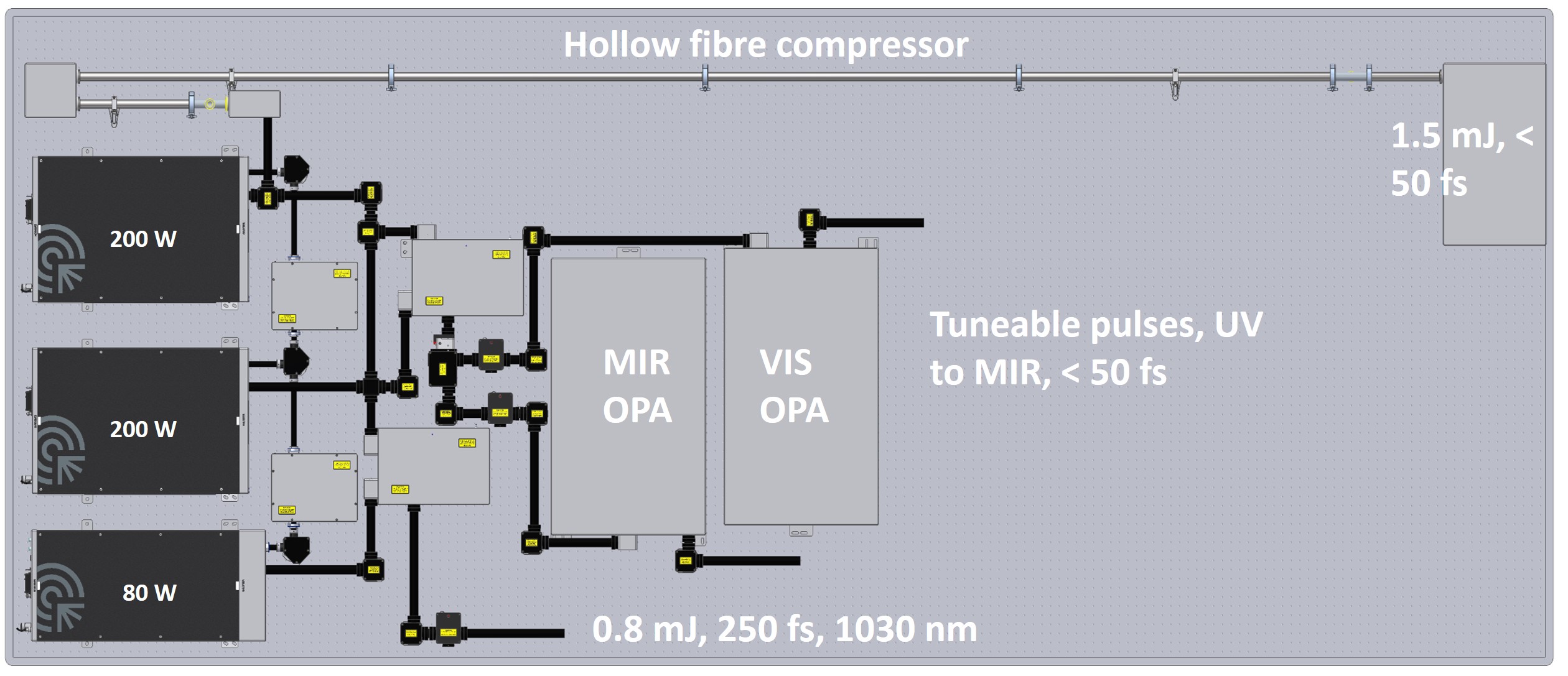
System 2 is a 100kHz laser system from Light Conversion. It consists of three optically synchronised Yb:KGW lasers (Light Conversion Carbides) using a common oscillator. One 200W Carbide laser is used to drive a hollow core fibre (FewCycle) to generate >150W of <50fs, 1030nm light which is used for high-harmonic generation. A second 200W Carbide is used to drive one of two Orpheus optical parametric amplifiers to produce short pulses which are continuously tuneable from 235nm to 10 microns. A third 80W Carbide laser will be post-compressed or used for frequency mixing.
Artemis produces coherent, femtosecond pulses of extreme ultraviolet (XUV) through high harmonic generation (HHG) in a gas target. A laser is focused to an intensity of approximately 1014 Wcm-2 in a differentially pumped gas cell and up to one part in 106 of the energy is converted to short pulses of XUV radiation in the 8 to 120nm (10 to 150eV) range. The XUV pulses have a similar pulse-duration to the drive laser pulses (approximately 50fs) and are synchronised to them with sub-fs resolution.
Please don’t hesitate to contact us and we’ll work with you to provide a solution to the best of our ability.
Contact us