Ultra

Ultra is a time-resolved spectroscopy facility, offering a range of pump–probe techniques. Key focuses are on vibrational spectroscopies, non-linear spectroscopy and femtosecond to second timescales measurements.

Parts of the Ultra and Artemis facilities are currently undergoing a major upgrade called HiLUX.

Read about the HiLUX upgrade to Ultra and Artemis facilities here.

Facility overview

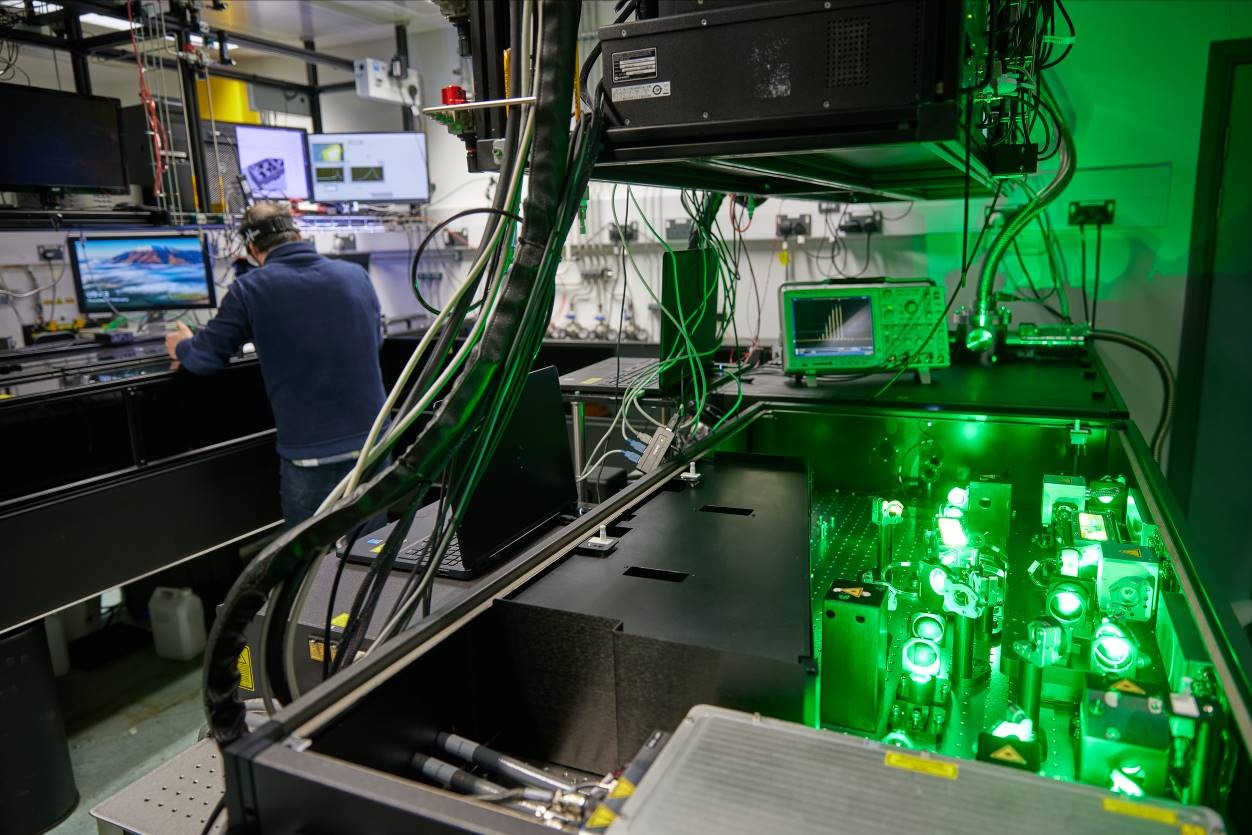
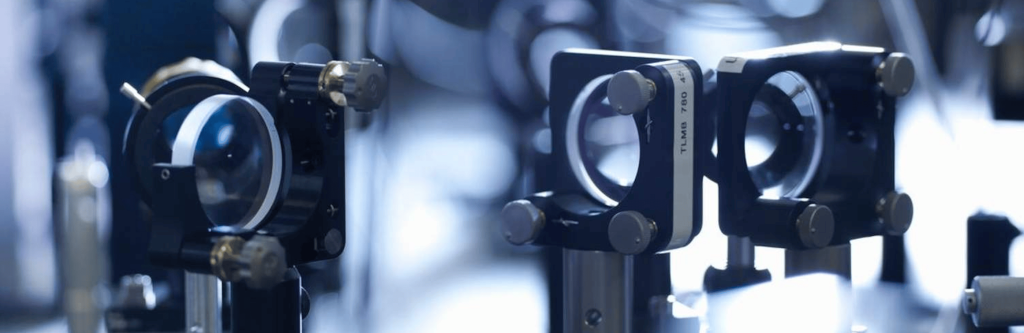
Ultra provides a range of laser spectroscopy instruments driven by UV to IR ultrafast lasers. Three key capabilities are available that allow time-resolved measurements from femtosecond to seconds, pumping and probing in a variety of ways:

  • the excitation of samples vibrationally or electronically with femtosecond IR or UV-NIR pulses, or with energetic nanosecond IR pulses to generated temperature-jumps in the samples for studying thermally driven processes 
  • probing changes in a sample with Raman scattering or UV–IR absorption spectroscopies, as well as one of the more advanced techniques 
  • following time-resolved processes from femtoseconds to seconds, with no gaps on a single instrument, using single or multiple amplifier systems 

Non-linear spectroscopies 

Short pulses enhance advanced techniques such as Raman, sum-frequency generation and multi-dimensional spectroscopy. 

Revealing hidden information by fast gating 

Short pulses are used at the facility to reveal signals from strong backgrounds by ultrafast gating, using techniques such as Kerr-gated Raman spectroscopy to observe weak Raman signals often obscured by strong background fluorescence.

Applications

The facility supports a diverse range of applications across life and physical sciences. Examples of previous activities include:

Health and biology
Catalysis and surface science
Clean energy research
  • DNA damage studies, following electronic and vibrational changes to DNA following direct excitation or through excitation of photosensitisers 
  • photoactive protein dynamics studies to follow how chromophore excitation leads to protein function 
  • homogeneous photocatalysis studies to follow catalytic cycles, for fundamental chemistry studies as well as developing understanding on how to optimise industrial catalysts 
  • heterogeneous catalyst research into how chemistry at the surface and inside materials, such as Zeolites, enables catalysed chemical reactions
  • surface science, with the ability to characterise interface species and their activity 
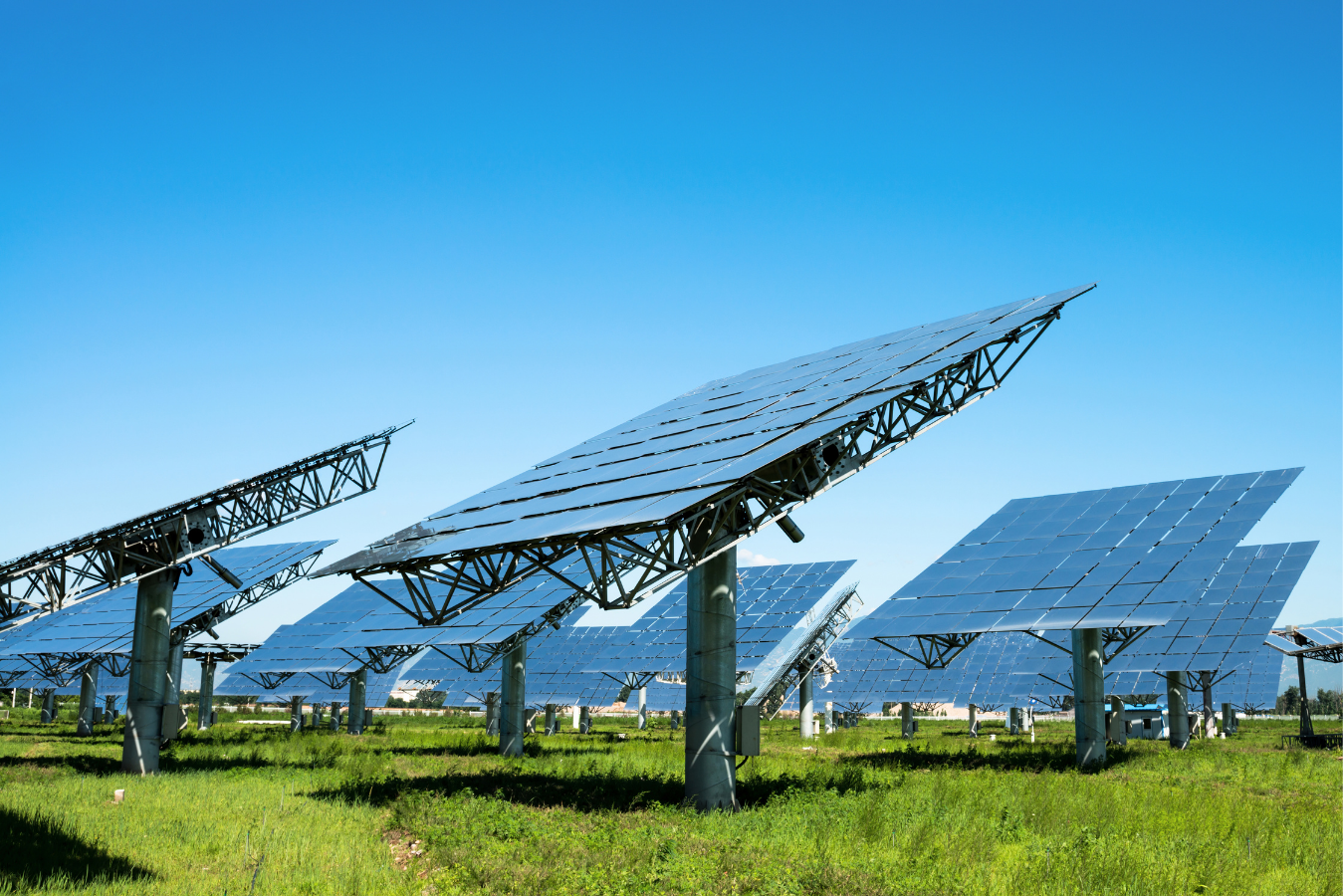
  • studies of battery or solar energy generating materials work through monitoring dynamics of molecules inside the materials or observing states of the materials as they operate 

Technical specifications

Laser systems

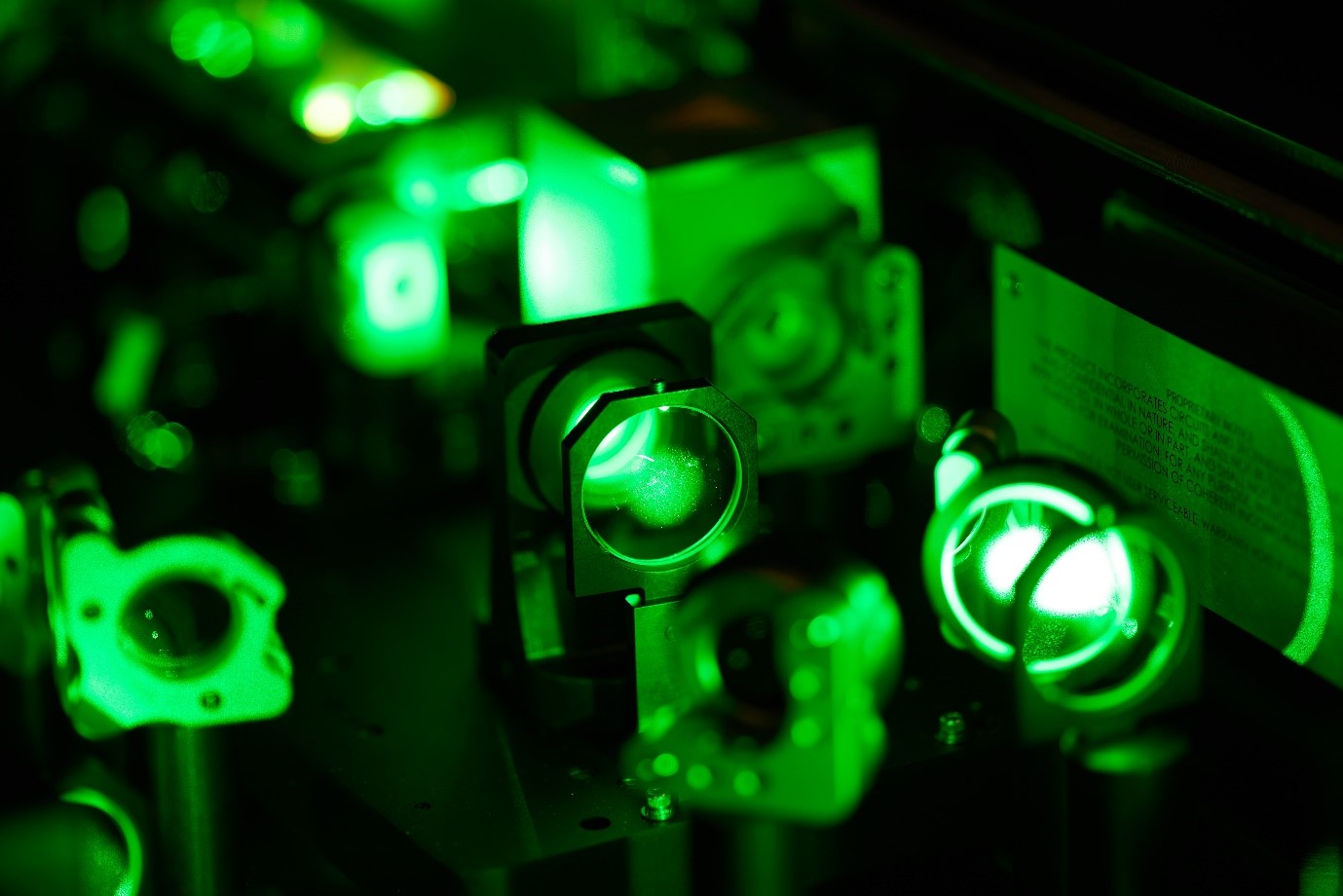
The facility manages many lasers with nanosecond to femtosecond pulses at high repetition rates (up to 100kHz) across the UV to IR. These lasers are grouped into the following laboratories:
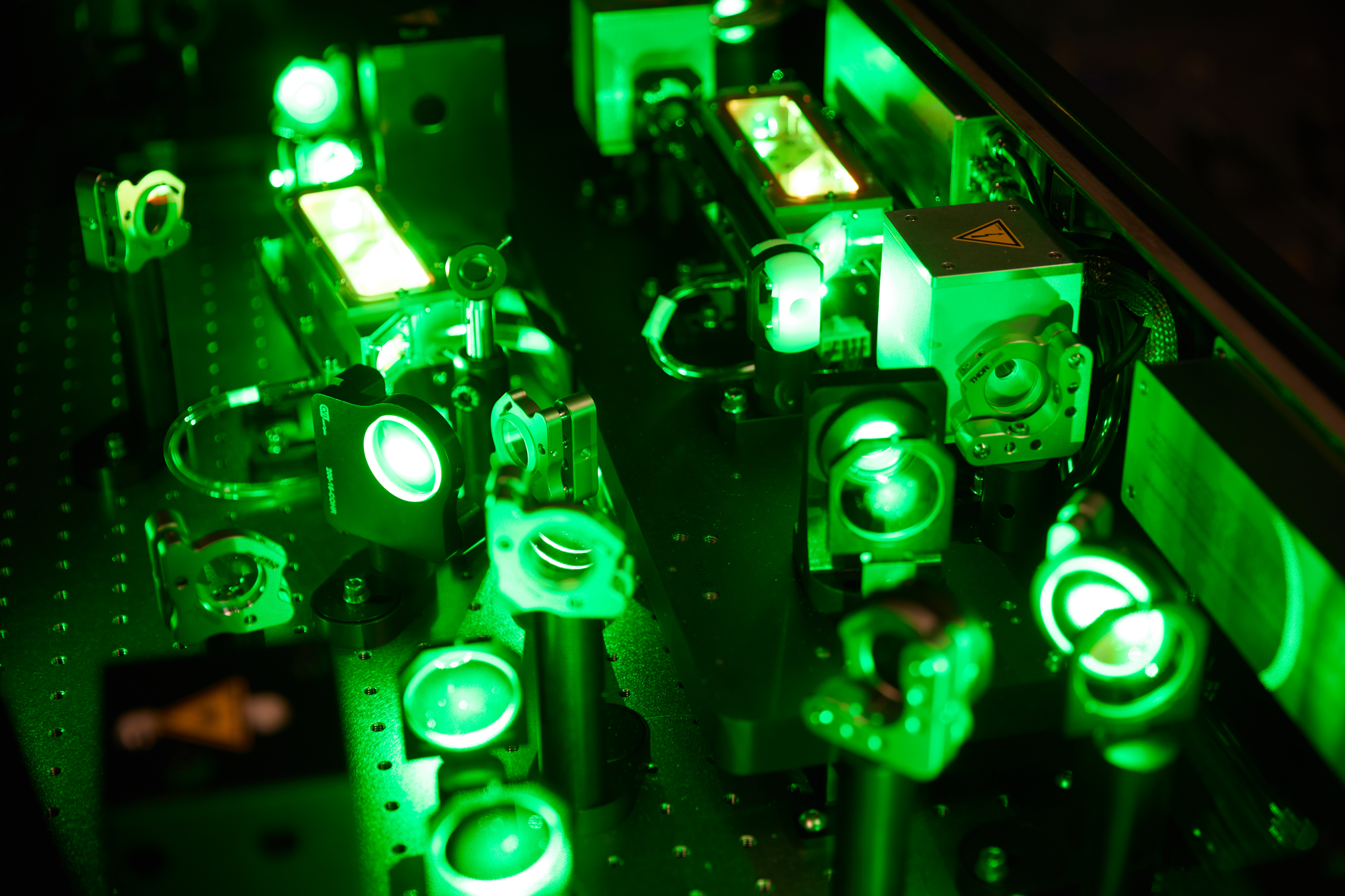
20kHz, 20W, <90fs, 1,030nm ytterbium amplifier (Pharos, Light Conversion)

  • 4OPA source 210 to 16,000nm
  • IR OPA sources 2000 to 16,000nm

Detectors

  • Ultra can measure the spectrum of each pulse of the laser at 100kHz using a range of MCT, InGaAs and Silicon array detectors 
  • Ultra can also measure weak signals such Raman scattering or SFG light from samples using sensitive integrating detectors 

Sample management

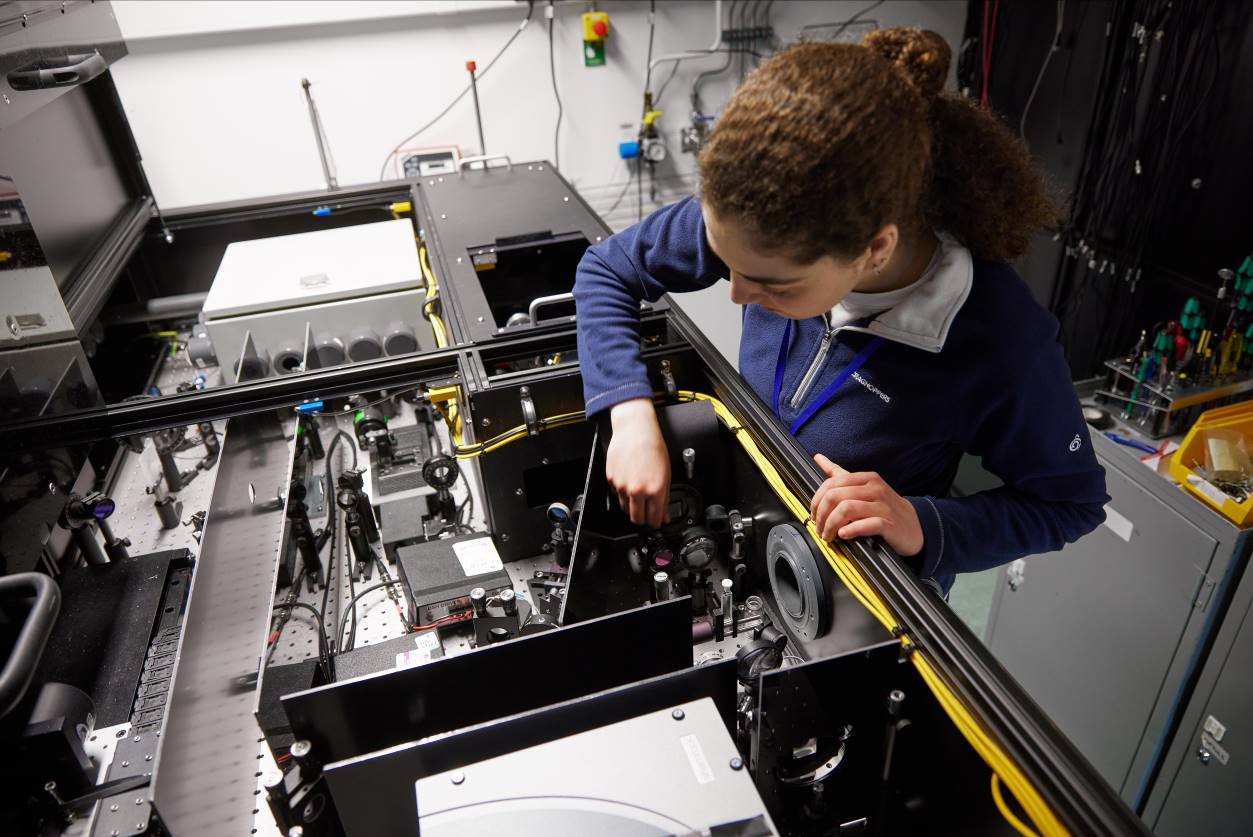
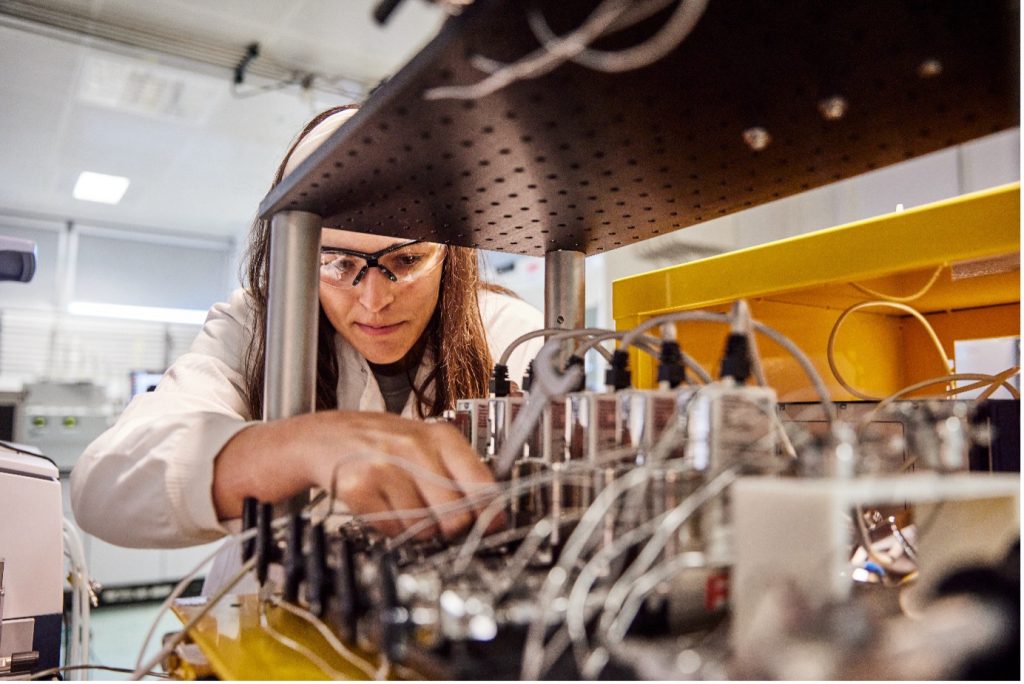
  • sample preparation facilities are provided with state-of-the-art laboratories enabling sensitive sample preparation across chemistry and biology 
  • a range of sample cells are available for temperature control, flow and various sample forms and quantities 

Meet the team

Sayantan Bhattacharya

Instrument Scientist at ULTRA Facility

Sayantan started work as one of the Instrument Scientists at Ultra in the summer 2024 to support the Facility’s operations and expertise. 

Ryan Phelps

Instrument Scientist at Ultra Facility

Ryan completed a three-year postdoc position at the University of Edinburgh, before joining the Ultra team in 2024 to support user experiments and assist in the delivery of the HiLUX project.

Partha Malakar

Instrument Scientist at Ultra Facility

Partha obtained his PhD in physical chemistry from the Department of Chemistry of the Indian Institute of Technology Madras in 2017.

Mike Towrie

Mike joined the CLF in 1989 and his research has centred on development and scientific application of lasers, detectors and spectroscopic and imaging instrumentation including the Raman Kerr-Gate.

Marta Szynkiewicz

Laboratory Manager at Ultra Facility

Marta coordinates Ultra Facility operations and manages the Chemistry and Instrumentation Laboratories.

Marilena Papadamou

Ultrafast Spectroscopy Industrial Placement Student

Marilena is focusing on ultrafast spectroscopy techniques, including 2D-IR spectroscopy, and is working on establishing an optical photothermal detection system.

Igor Sazanovich

Instrument Scientist at Ultra Facility

Igor joined the CLF in 2013 to support the maintenance​ of the Ultra laboratory infrastructure, to provide visiting scientists technical and scientific support

Ian Clark

Instrument Scientist at Ultra Facility

Ian obtained his PhD in time-resolved infrared spectroscopy from the University of Nottingham in 1997 before joining the STFC in the same year.

Greg Greetham

Head of Ultra Facility

Greg joined the CLF at the beginning of the STFC & BBSRC funded Ultra project to develop the scientific application of ultrafast lasers and molecular dynamics spectroscopy techniques

Emily Ross Hicken

Graduate Laboratory Support

Emily works in Ultra as graduate laboratory support, supporting the running of operations and the chemical preparation laboratory.​​​​​