About SORS
Conventional Raman Spectroscopy is named after physicist Sir C.V. Raman who won a Nobel Prize in 1930 for the discovery of Raman Scattering.
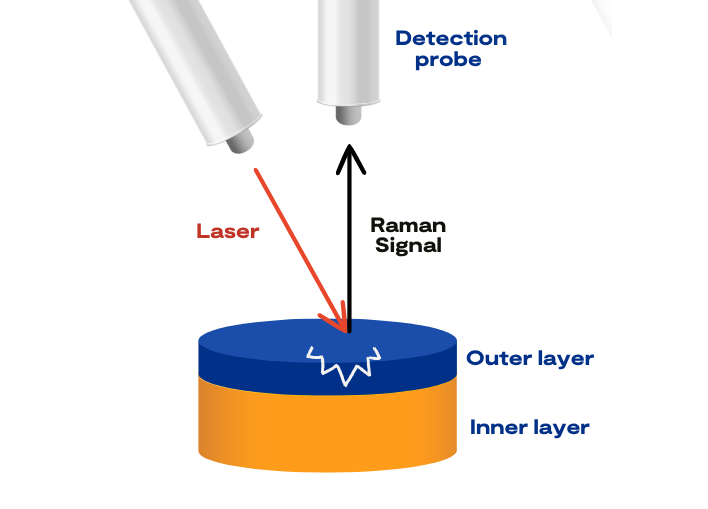
In conventional Raman Spectroscopy, a laser hits the sample, bounces from the molecules and is emitted straight back as a Raman Signal. A detection probe measures this light from the illumination spot, allowing us to determine the composition of the object’s outer layer.
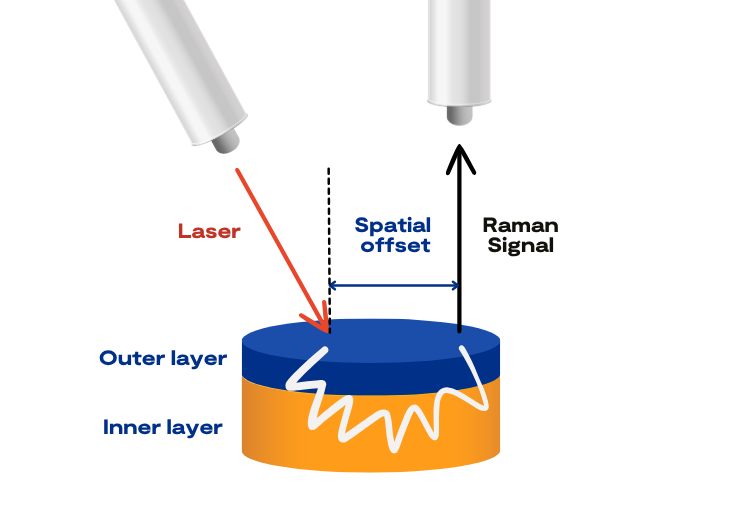
In SORS, the detection probe is “spatially offset”, allowing it to measure light emitted from molecules deeper within the sample. As a result, SORS can determine the chemical makeup of objects beneath surfaces, even if they are opaque.
SORS does this by shining a laser in one part of the sample and collecting the scattered light from a point close by. The distance from the collection point to the laser determines roughly the depth into the sample that is monitored. The Raman spectrum obtained shows a series of peaks, a unique ‘fingerprint’ of the chemicals present.
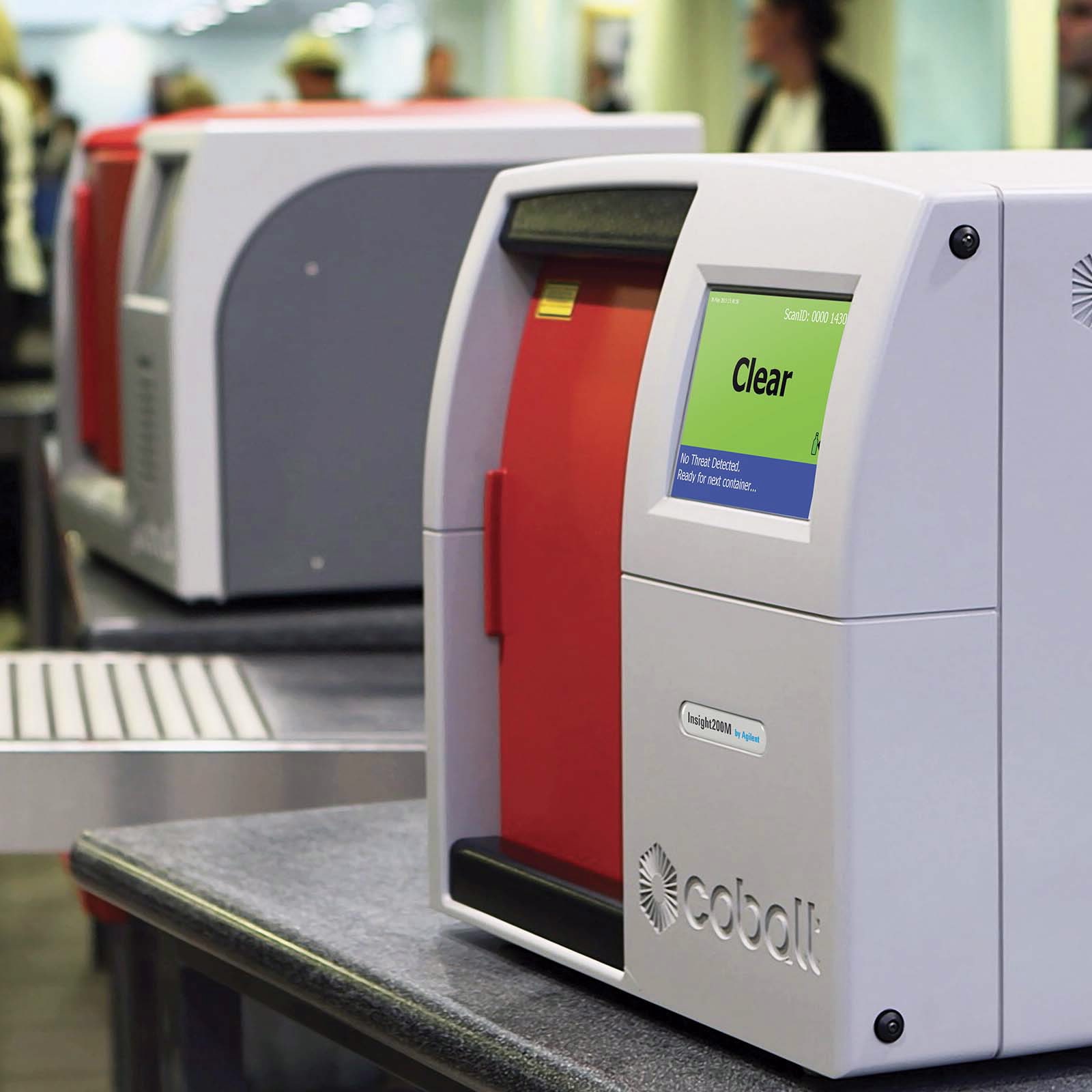
In 2008, the inventors of SORS (Prof Pavel Matousek and collaborators), created a CLF spin-out company called Cobalt Light Systems, which developed the Insight100 machine. Deployed in over 70 airports, these machines use SORS to screen unopened containers for potential explosives, streamlining the security process in airports.
As a result, Cobalt Light Systems grew to be an award-winning business placed amongst top tech firms.
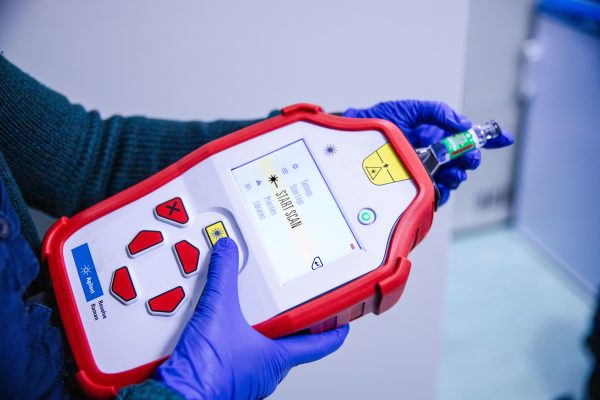
In 2017, Cobalt Light Systems was acquired by Agilent Technologies for £40 million. Since then, variations of and improvements on this technology, such as handheld versions for other applications, have been developed. (Image credit: Agilent)
Applications
What makes SORS so useful is that it can be used safely and accurately by non-specialists. Rather than showing raw data (peaks on a graph), devices can be set to display the names and amounts of identified substances from a pre-programmed bank. SORS uses low-level, non-ionising light which makes it safe to use repeatedly without protective equipment.As a result, new applications are being explored to this day.
SORS can be used for the non-destructive analysis of precious artworks, allowing us to study layers of paint without disrupting their integrity. For example, it has been used to:
- read historical letters without opening them
- date paintings and artefacts by seeing down to the oldest layers of paint and identifying their ingredients
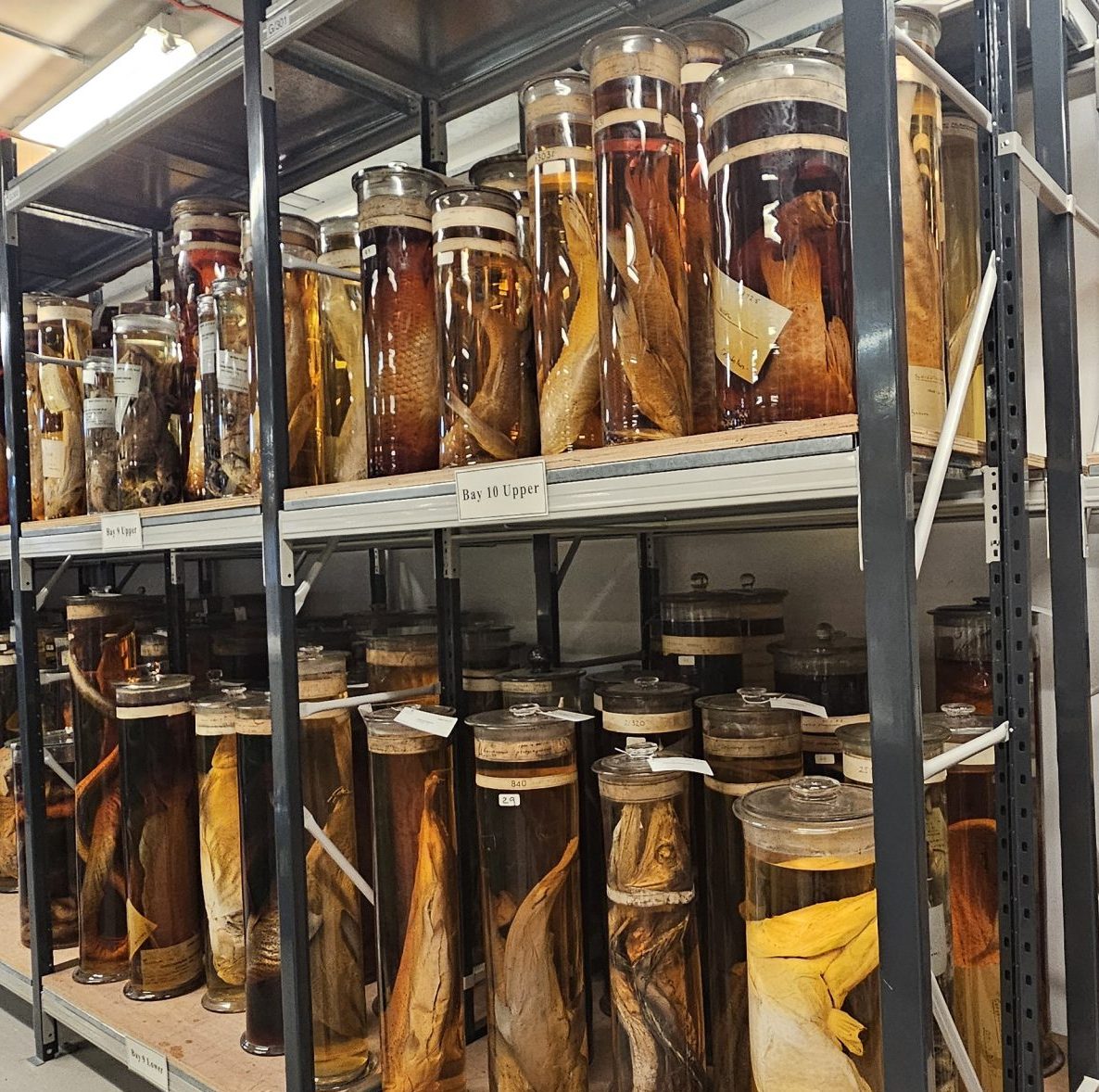
- discover the composition of liquid preservatives used in Charle’s Darwin’s jarred species collection

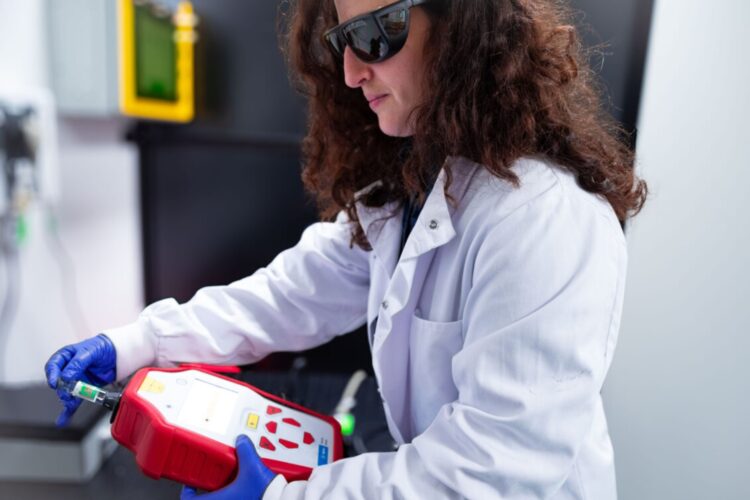
Due to its non-invasive, non-ionising qualities, SORS has some exciting potential applications in the field of health and medicine. SORS has been used in research to:
- assess the quality of pharmaceuticals during production
- identify counterfeit pharmaceutical drugs through their packaging. For example, in the aftermath of the COVID-19 pandemic, a team of scientists led by Prof. Paul Newton (Oxford University) demonstrated the viability of using handheld SORS devices to rapidly authenticate vaccines through unopened vials
- potentially offer an alternative, less invasive method for cancer diagnosis than the needle biopsy
- become part of a new technique in development (RaNT) that could one day aid in cancer treatment
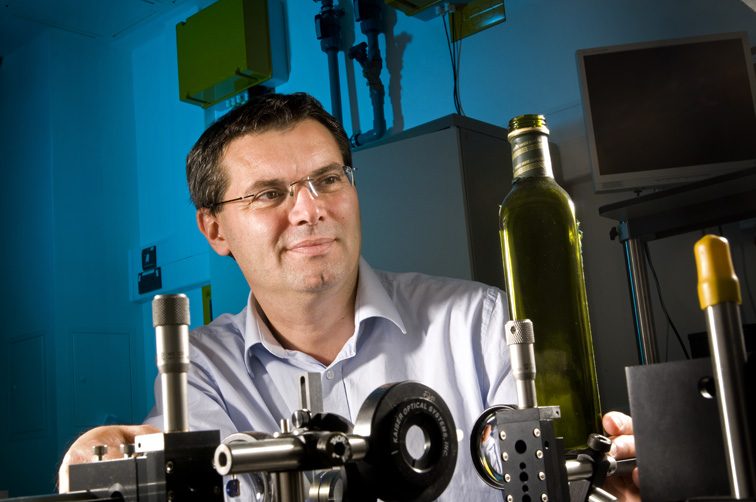
SORS can also be used to carry out food authentication, such as to:
- screen for counterfeit olive oil and alcohol
- quantify butter adulteration with margarine
- identify the origin of cheeses
- detect the addition of sugar to UK honeys
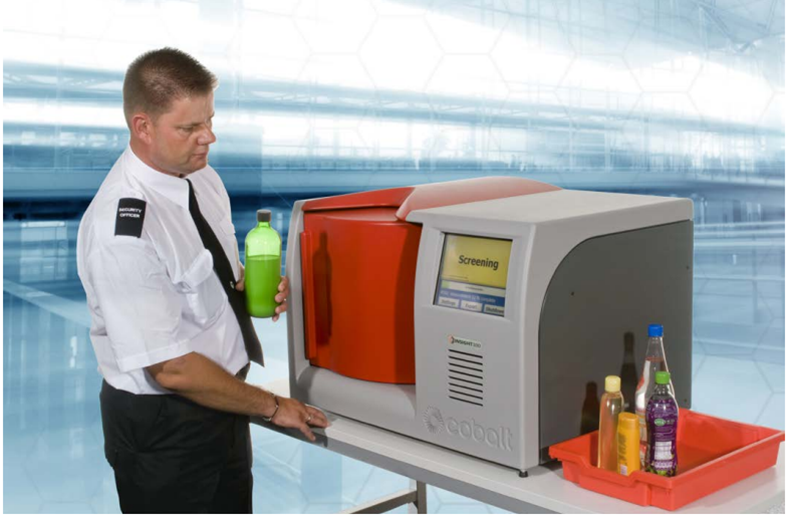
Airport SORS scanner in action. Credit: Agilent
As mentioned above, SORS is most known for its use in airport security.
SORS devices are also currently used by fire officers, military, border protection and law enforcement to identify suspicious packages without touching them.
Technique modifications
Micro-SORS
Micro-SORS can also be used to uncover hidden images, allowing us to study paintings vandalised by graffiti, historic letters sealed within envelopes and more.
The layers of pigments in artworks are usually much thinner than can be resolved by conventional SORS. To address this limitation, the CLF partnered with ISPC-CNR Italy, combining SORS with microscopy to create a new technique called micro-SORS which can probe layers of paint that are only several tens of micrometres thick (about the width of a human hair).
The technique has also been used for the study of hidden images and writings, as it can determine overlayer depth, reject overlayer fluorescence and permit two-dimensional mapping of thin materials.

SESORS and RaNT
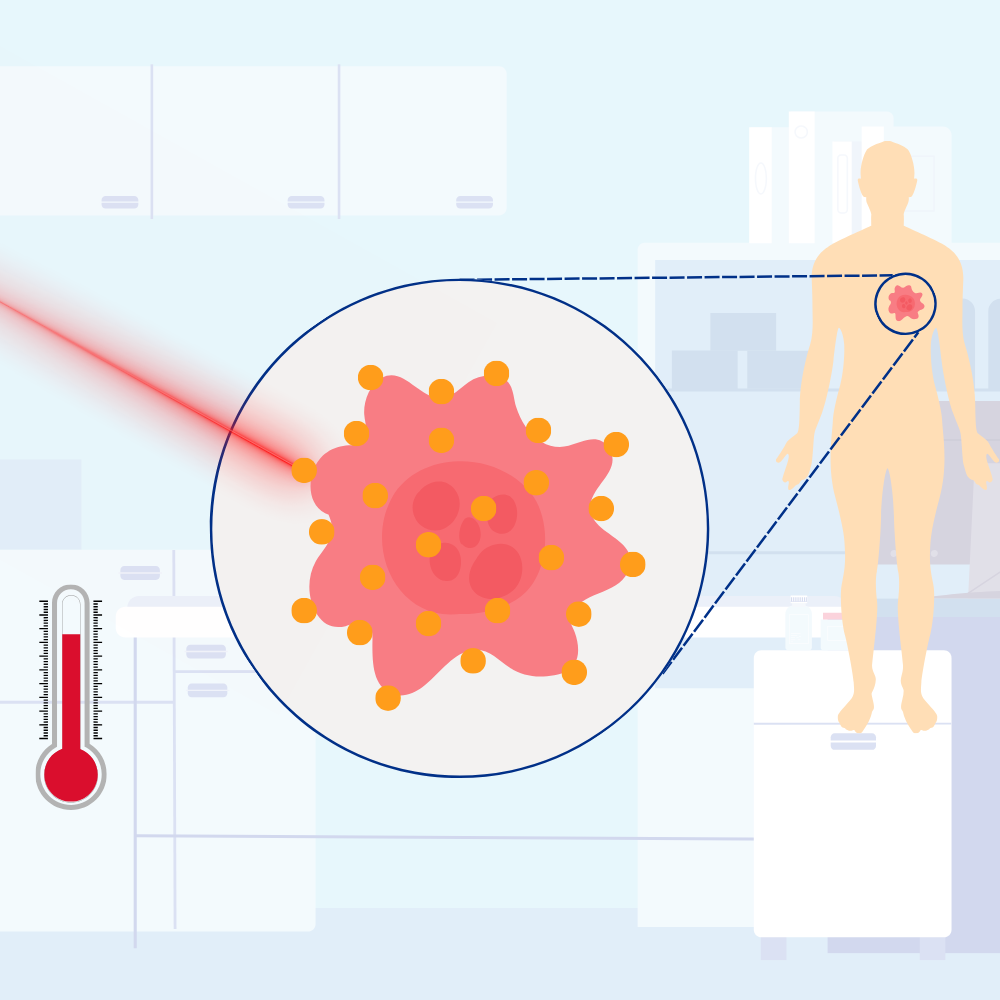
Surface-enhanced SORS (SESORS) is another variation of SORS that is currently being developed to diagnose and treat cancer quickly and effectively. The method combines two Raman spectroscopic techniques, Surface Enhanced Raman Spectroscopy (SERS) and SORS.
Doctors could inject gold nanoparticles that bind specifically to tumours into a patient’s body. Lasers could then be used to detect the nanoparticles, and hence locate the tumours, less invasively than current methods. Doctors could then tune the power of the laser in a controlled manner to heat up only the gold nanoparticles. This kills the surrounding tumour cells while leaving healthy cells intact.
Dubbed Raman Nanotheranostics (RaNT), this new method of cancer diagnosis and treatment is currently being developed by the CLF in collaboration with Prof. Nick Stone (University of Exeter) and scientists from Cambridge University and UCL.