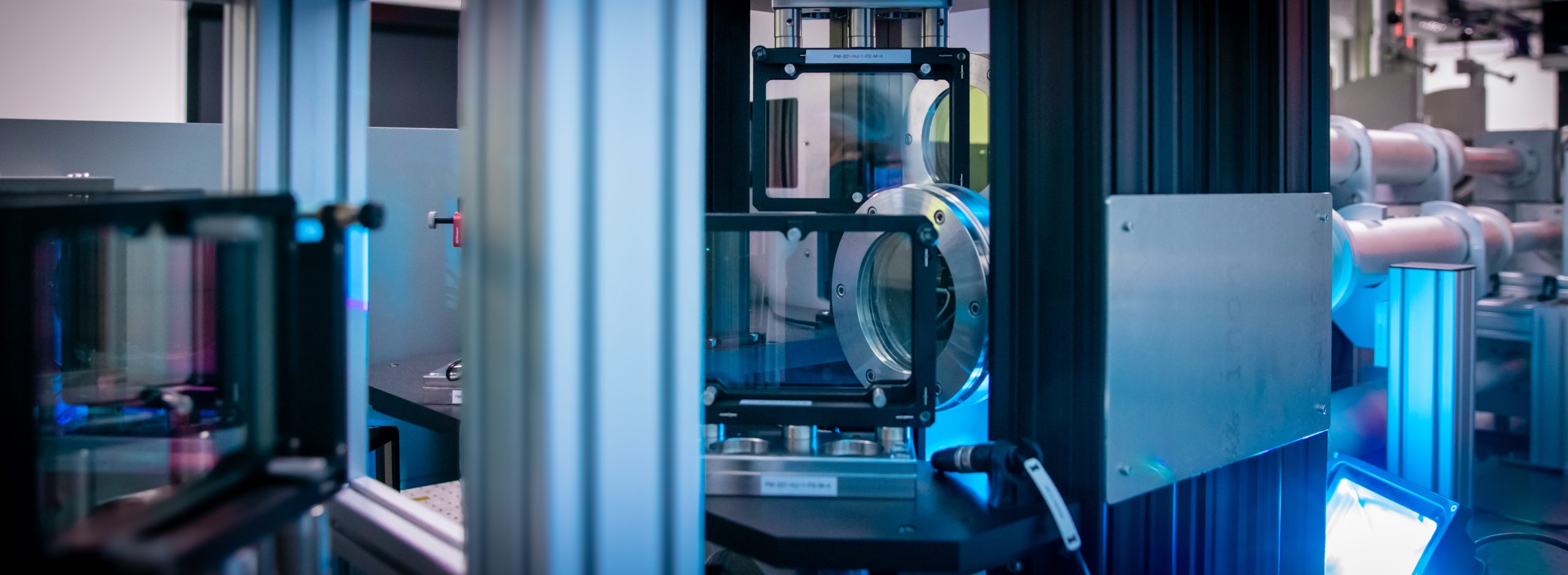
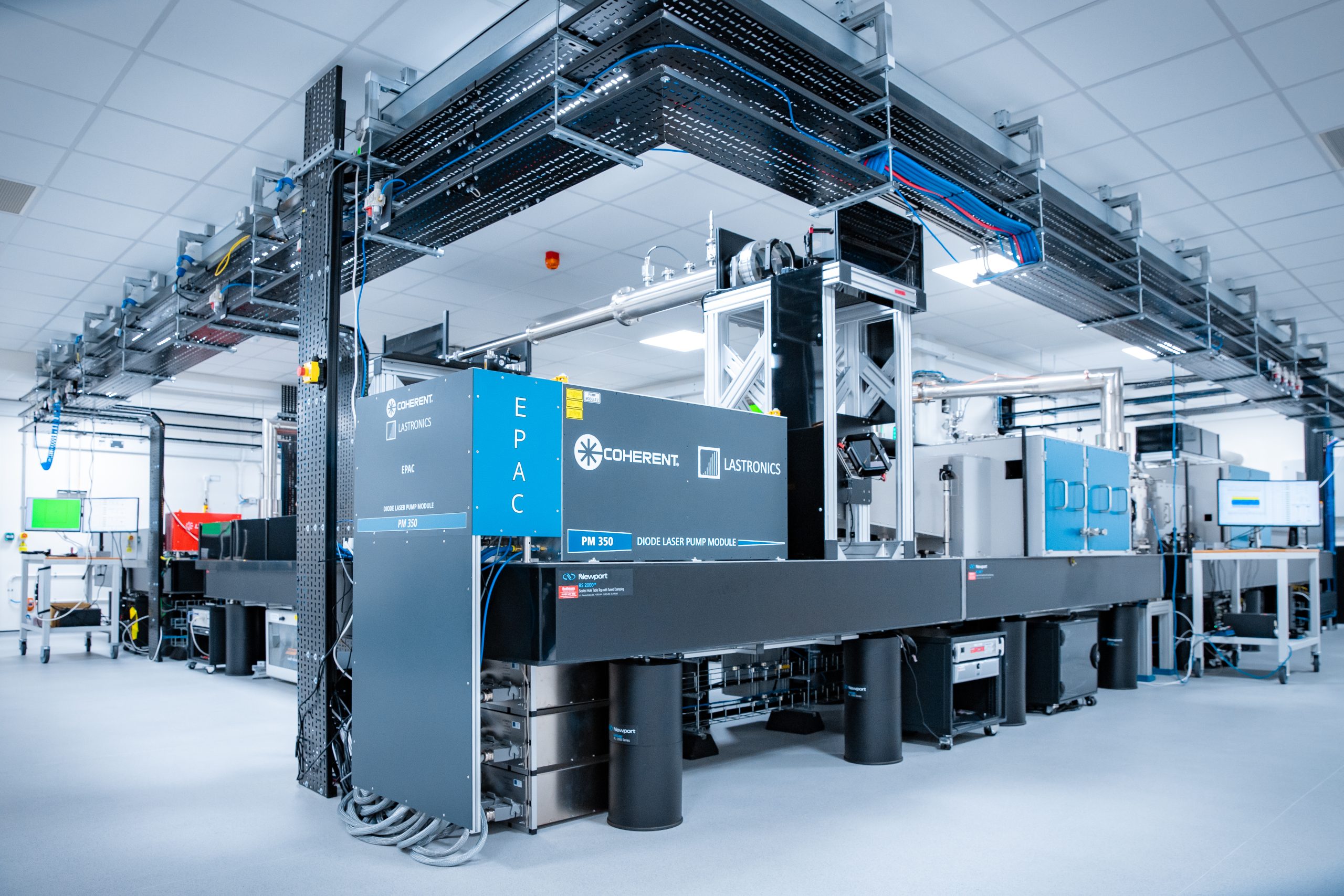
DiPOLE for EPAC

The CALTA team is recognised for its expertise in developing high-energy DiPOLE systems, which can be customised to serve a variety of uses; for example, DiPOLE’s application in laser shock peening. Another use is as a pump source for other lasers, like for an optical parametric chirped pulse amplification (OPCPA) system or a titanium-doped sapphire (Ti:S) laser. As such, a DiPOLE 100 system is being used as the pump laser for a Ti:S laser system in the EPAC facility.

To use a DiPOLE system as a pump laser, the colour, or wavelength, of the laser must be changed from its original infrared to green in a process called frequency doubling, or second harmonic generation. The CALTA team achieved an impressive, world-leading 80% conversion efficiency from infrared to green. This demonstrated the suitability of the DiPOLE pump for driving Ti:S amplifiers or OPCPA systems. The ability to use proven DiPOLE technology as a high repetition rate pump source has paved the way for the development of multi-Hz Petawatt lasers.
How EPAC’s DiPOLE pump laser works

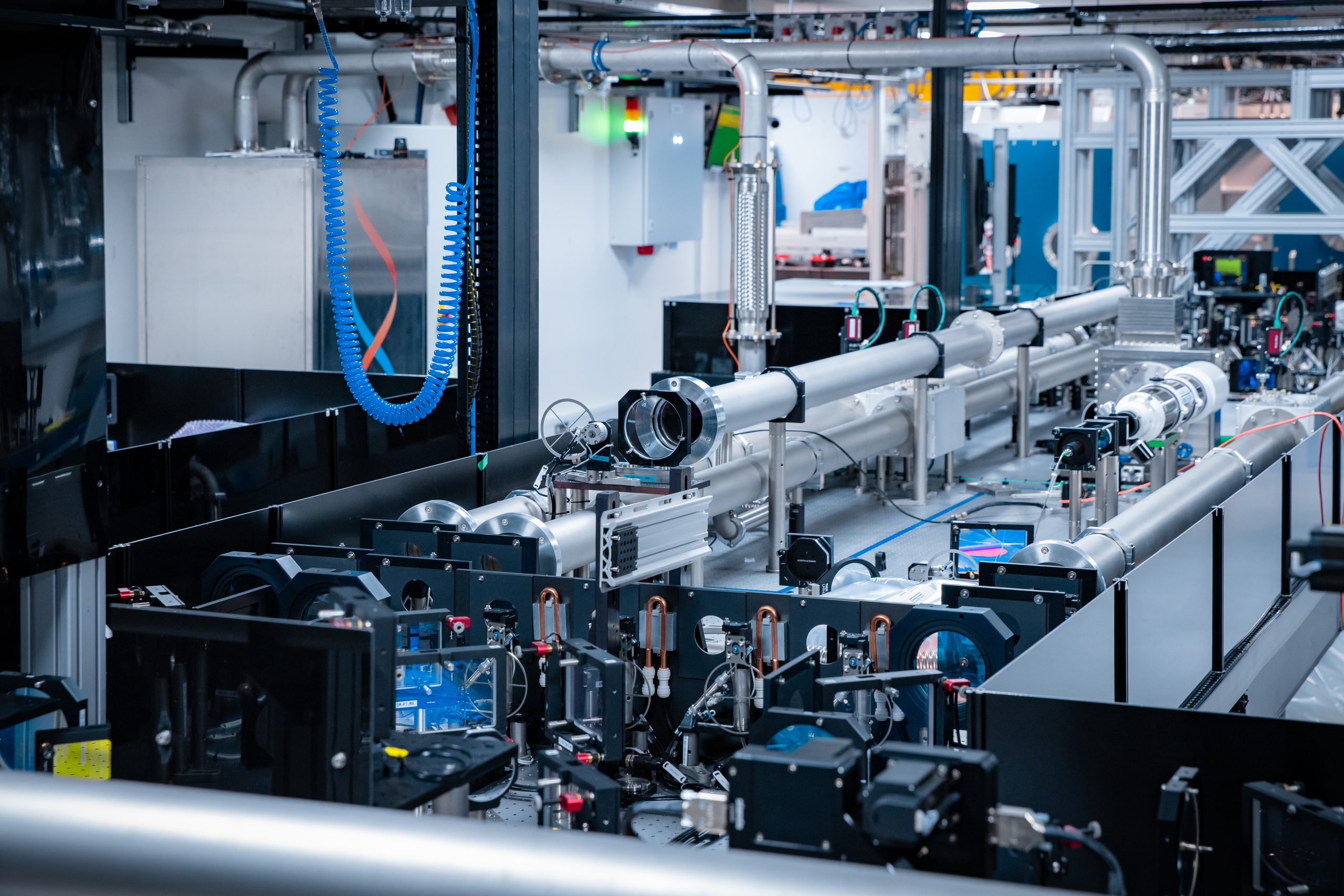
The DiPOLE system developed for EPAC consists of three main sections. The first section generates a small low energy circular laser beam. This is expanded and shaped to a square as it passes through the second stage, which includes the first 10J cryogenically cooled amplifier head. The final section of the system is the second cryogenic amplifier head, which generates 120J of laser energy in every pulse, with a 10Hz repetition rate. The beam at the output is a large square with a size of 75 x 75mm.

Learn more about how DiPOLE’s systems work

Frequency Conversion of the Pump Laser

The DiPOLE pump laser moves through a crystal that converts the infrared light to green in a process called second harmonic generation. We are able to generate at least 70J of green light at the Ti:S crystals from 120J of infrared at the frequency conversion crystal. The green beam is split into two separate beams that are used to pump the Ti:S gain medium from both sides.

The main Ti:S amplifier

In addition to building the pump laser system, the CALTA team also developed the main Ti:S amplifier. At the centre of this laser system is an amplifier head which contains a pair of Ti:S crystals, which is the gain medium for this type of laser. Each of the crystals is 125 x 105 x 20mm.

The amplifier head allows a flow of helium over the gain medium to keep it cool and allow it to operate at pulse repetition rates of 10Hz. The laser pulse travels through the amplifier head four times, energising it to 30J. To maintain a good beam quality, the system uses relay imaging, which is where a set of lenses create a telescope which transports an image of the beam to somewhere further along the beam path.