
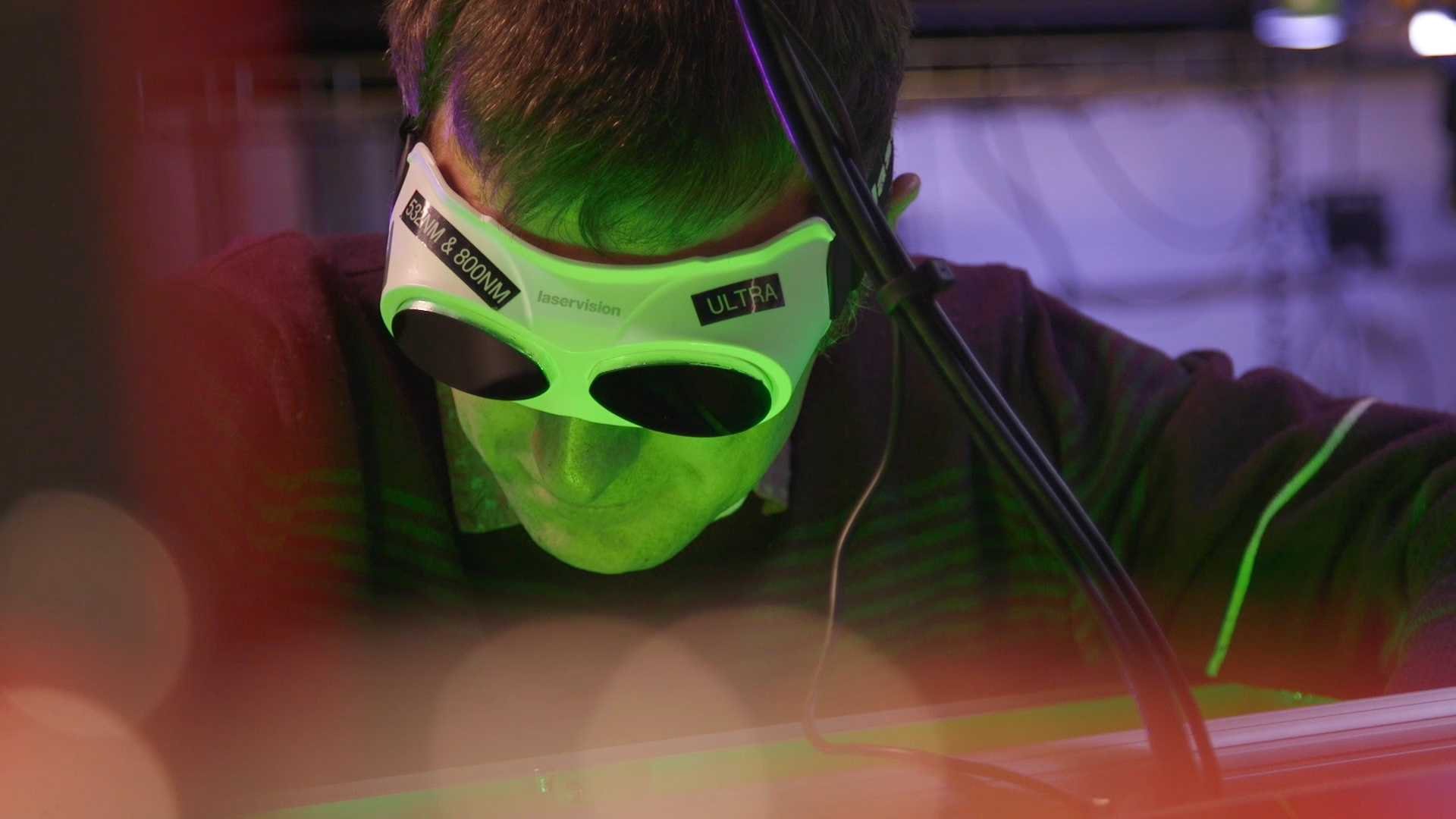
CLF’s Ultra system, housed within the Research Complex at Harwell, is one of the world’s most sensitive 2D-IR spectrometers and is used to investigate dynamics of complex biological systems such as the protein Calmodulin studied in this experiment.
By measuring the thermal stability and Ca2+ - binding transition of human CaM with IR absorption and 2D-IR spectroscopy, the team have proved that 2D-IR can be used to reliably quantify relative changes in secondary structure elements in proteins by measuring subtle changes in the 2D-IR spectra of the amide I IR absorption band.
Not only can ultrafast 2D-IR spectroscopy of unlabelled proteins help scientists paint a broader picture of conformational change but it can also help create a platform for spatially targeted studies.
The research was supported by academic access to CLF and the full publication is available: