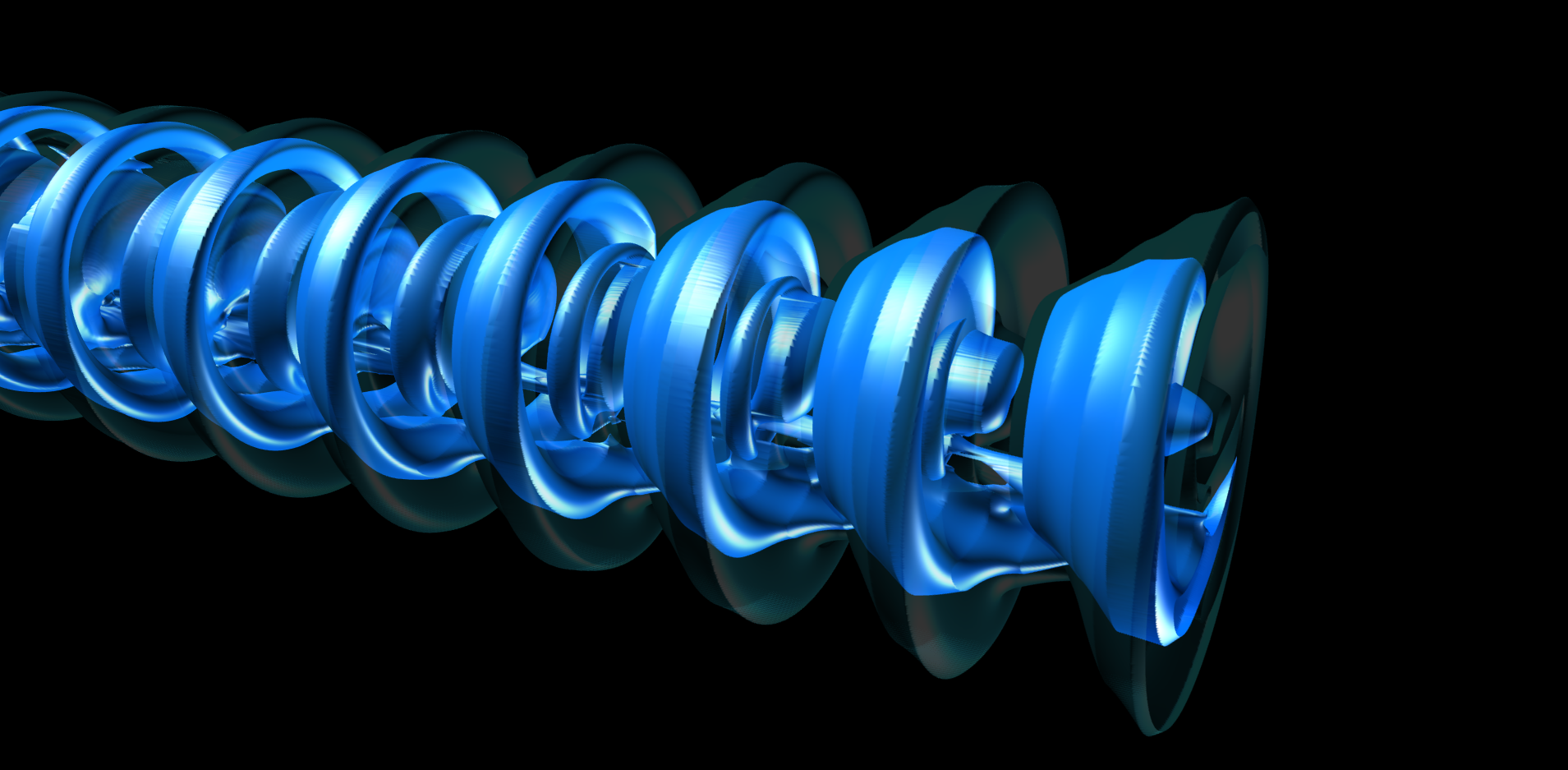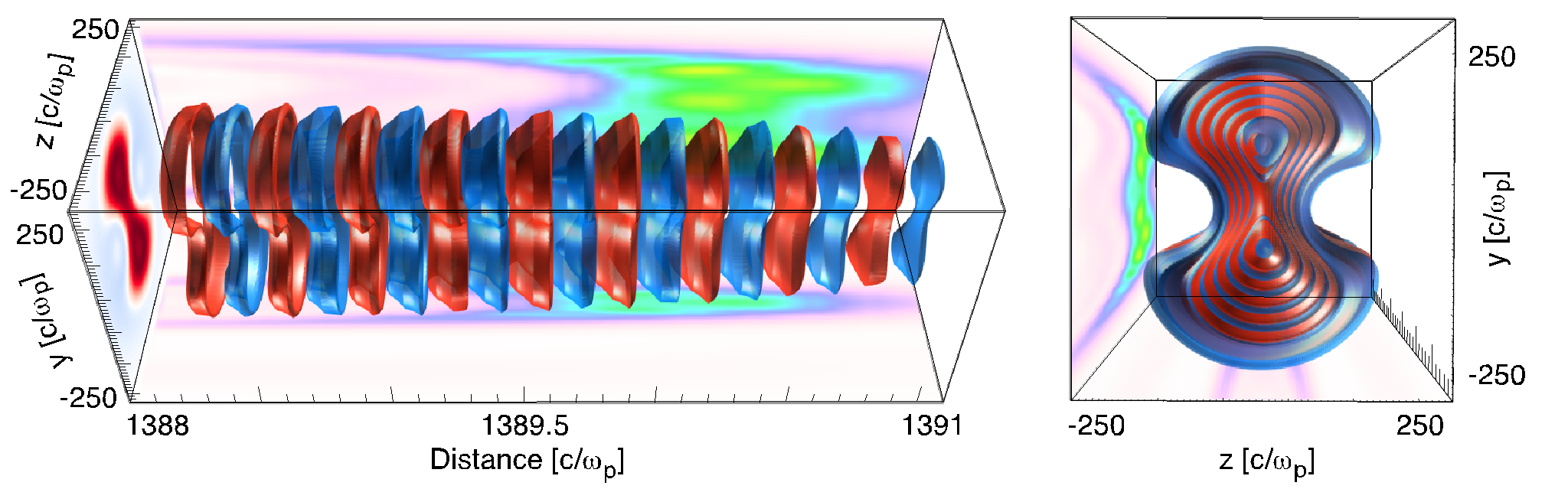
By unravelling a new way to control the whirling motion of photons, this work may influence the development of new generations of super-resolution microscopes for imaging in medicine and science. The discovery was published in the issue of December 23rd of Physical Review Letters, and the editors have selected to highlight it on the front cover of the edition of 23 December 2016.
An optical vortex is an unusual light form, where the photons rotate as they move forming an electromagnetic field structure that resembles a tornado, or the whirling structures formed by draining water in our homes. Far from a mere scientific curiosity, optical vortexes laser beams have an outstanding potential to revolutionise key technologies of modern society. One of the most promising areas is related to optical microscopes with magnification powers that greatly exceed the actual limits.
Scientists believe that photons that whirl faster can have a greater magnification potential. One of the challenges for the development of advanced microscopy techniques based on optical vortices resides in the difficulty of increasing their rotation speed independently of any other property. Showing this can be achieved is an outstanding technological and scientific challenge.
Now, the research team composed from researchers at IST in collaboration with physicists from the CLF Plasma Physics Group, the University of Oxford and the University of Strathclyde has now unravelled a solution to this question. The solution takes advantage from unusual optical properties of the plasma. The plasma, many times referred to as the fourth state of matter, can be obtained when the temperature is so high that matter becomes ionised. Once turned into plasma, matter can change the propagation of intense laser beams. The research team showed that the plasma is an ideal medium to produce light vortices that spin much faster than what had been possible to demonstrate.