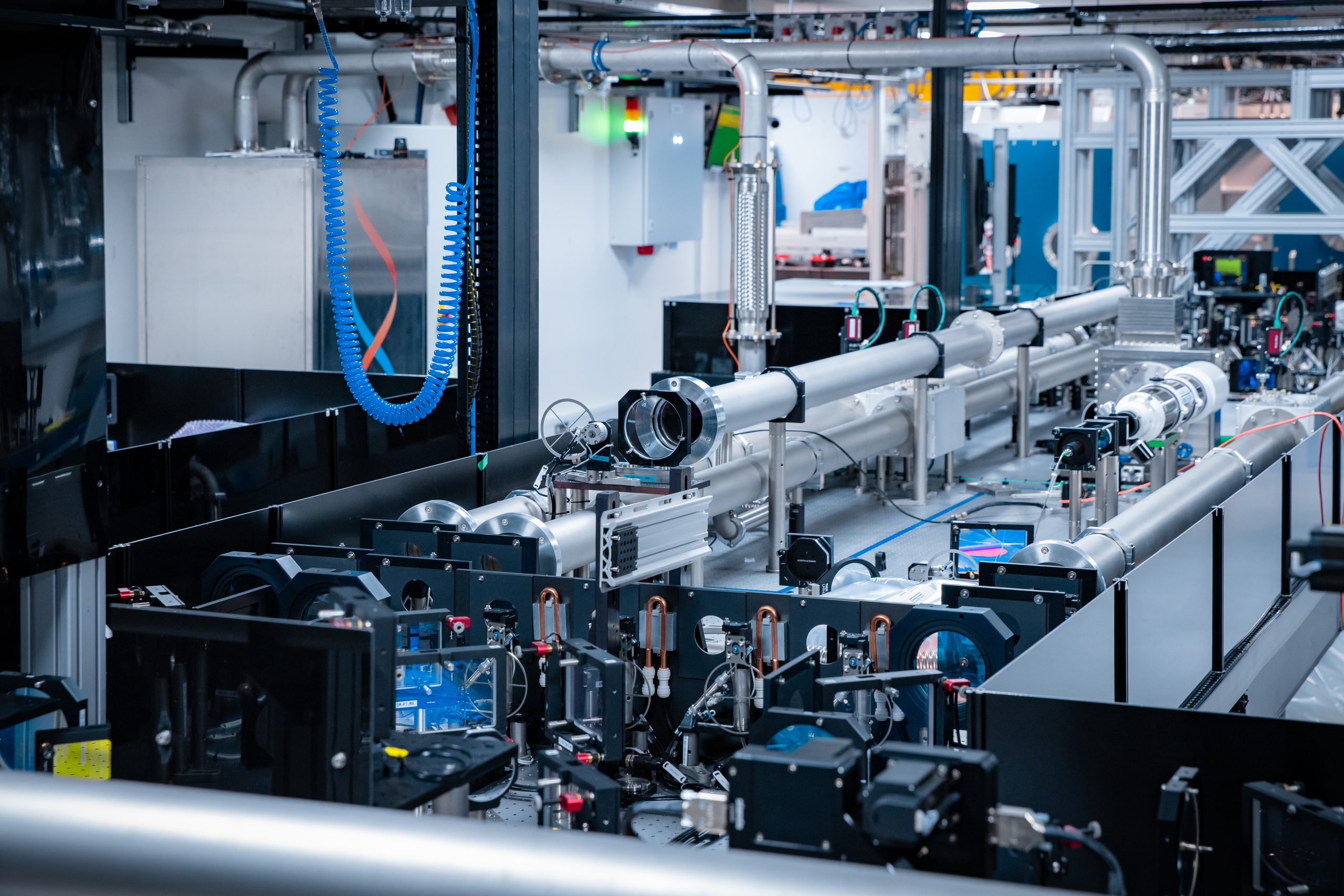
Multimodal imaging is the process of imaging a sample using two different complementary techniques.
Lasers are the only particle beam source with the flexibility to produce different beams using the same driver. Lasers have been shown to produce a combination of particles and photons simultaneously during each individual shot.
Multimodal techniques are particularly powerful when they complement one another, such as neutrons and X-rays, which are absorbed differently by different materials. They are also beneficial when observing dynamic processes which may not be in the same position in subsequent shots. Experiments on EPAC could be combined with those from other facilities at STFC (for example Diamond and ISIS).
EPAC will be able to use some techniques simultaneously (for example, protons and X-rays), and others consecutively (for example, neutrons and X-rays). This has the potential to reduce the resources required to test samples and will be particularly beneficial for samples that are difficult to move or need a specific environment (for example, temperature and pressure) that could not be replicated in subsequent tests. It will also support experiments where there is time sensitivity, such as samples that may change with delays to subsequent tests.