Adaptive Optics
The Adaptive Optics (AO) programme in the CLF has been in existence for about 20 years, motivated by the Vulcan Petawatt (PW) upgrade in late 1990s.
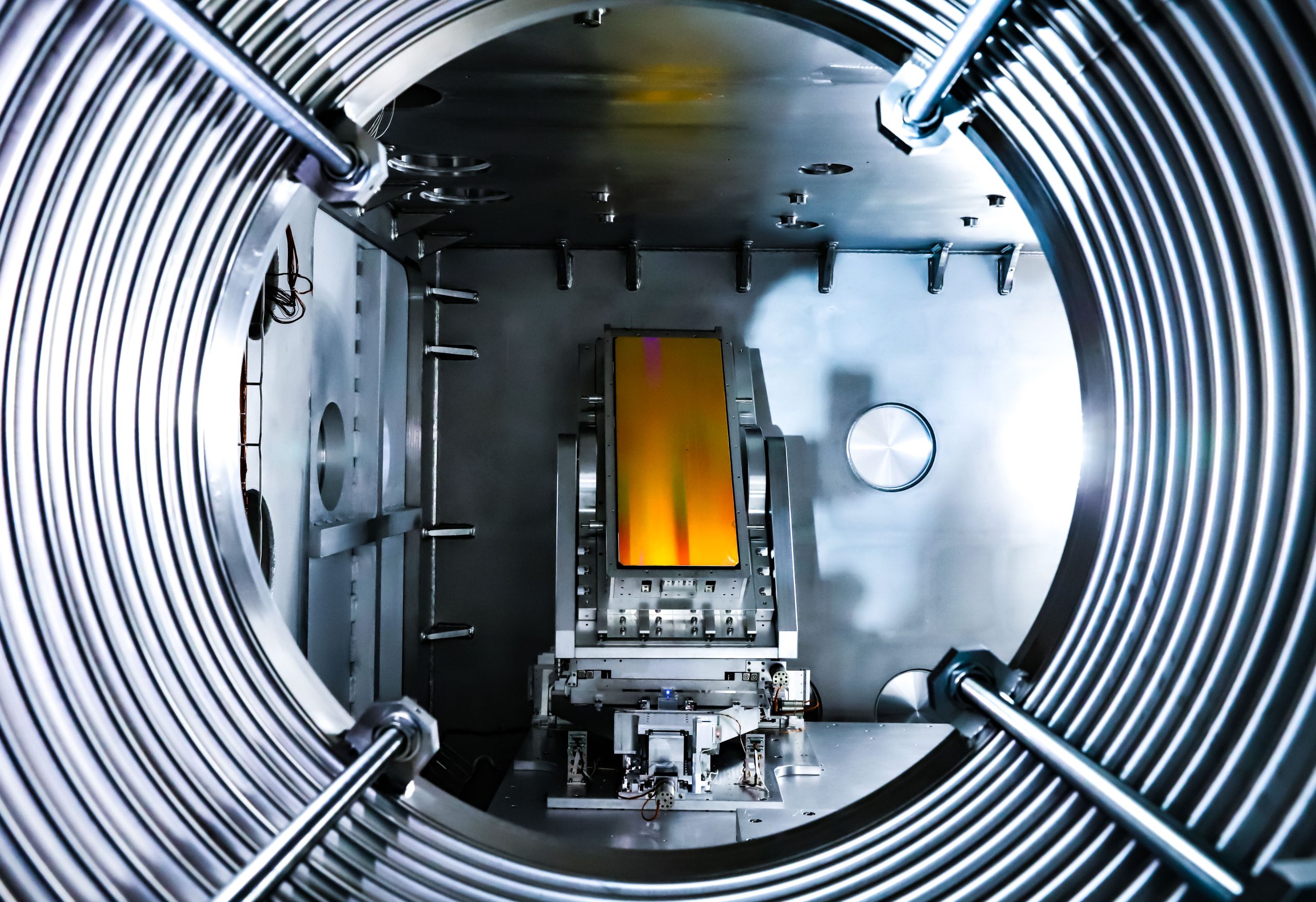
Deformable mirrors are used in high-power laser systems such as Vulcan and Gemini to improve the focal spot quality on target, and hence obtain the highest possible intensity for experiments. The errors that occur in laser systems are accumulated errors from the large numbers of optics in the laser chain, and from thermal effects that cause distortions in laser gain media.
The AO mirrors are based on bimorph technology, using piezoceramic discs with a segmented actuator pattern driven by the output of the computer software to provide the shaping required to correct wavefront errors.
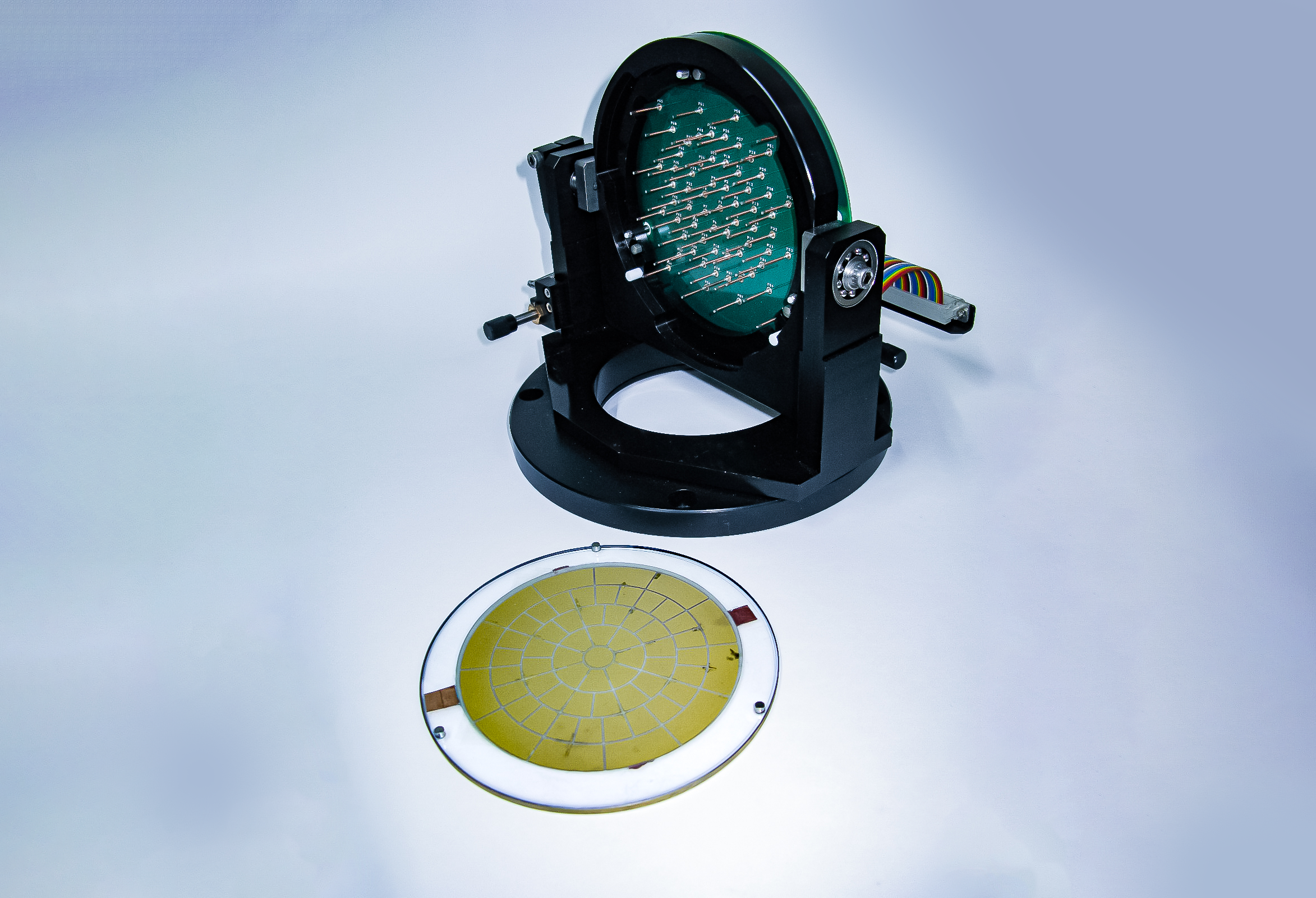
The first mirror developed had metallic coatings with an aperture of 108mm, with both the high voltage control, software and sensor made in house. It successfully operated in the Vulcan PW beamline.
Over the past decade, work has focused on the development and manufacture of the AO mirror itself, increasing the size up to 250mm diameter, and introducing the use of dielectric coatings rather than metallic. Most of the sensors and high voltage controls used are commercially sourced.
The progress made on AO development has allowed CLF mirrors to be used in Gemini, Vulcan, DiPOLE 100-X and more recently in EPAC.
Vulcan shot rate
Increasing the number of shots delivered by the Vulcan facility has been a key technology programme for over a decade.
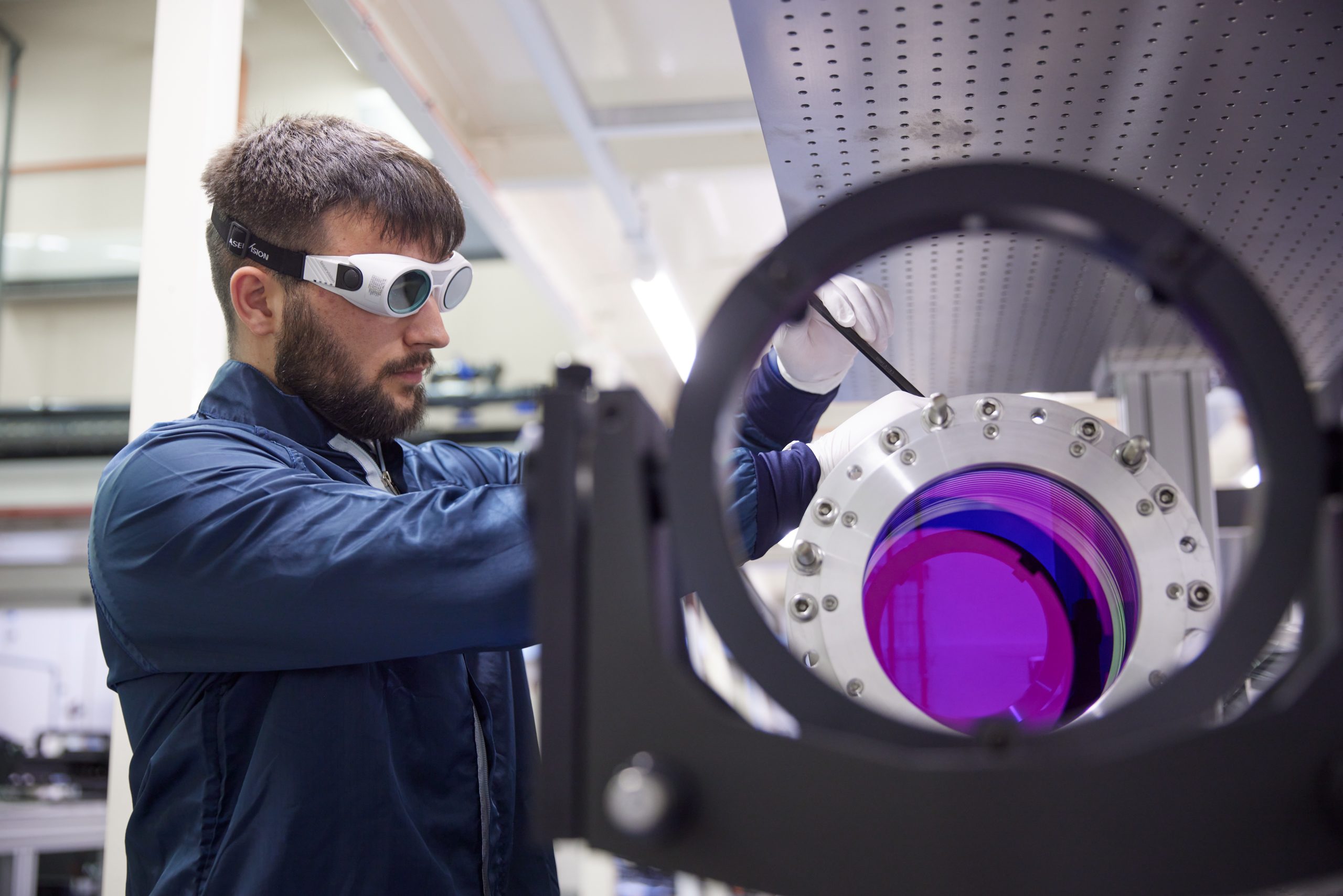
The Vulcan laser uses large flashlamp pumped “disc” amplifiers to provide the laser energy to its target areas. The existing disc amplifiers require a cooling cycle of approximately 30 minutes between laser shots to reduce the thermal aberrations in the beam to a level that allows good focusing.
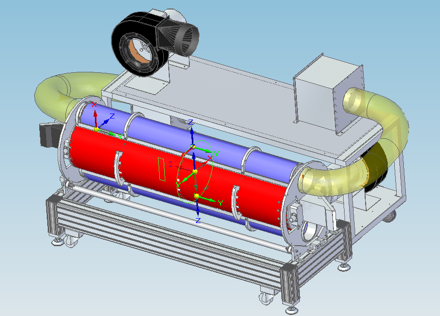
The CLF has designed and built a new air-cooled disc amplifier prototype that can operate at one pulse every 5 minutes. The increase in repetition rate was driven by user community and their requirement to increase the number of shots per day in the Vulcan 20-20 facility.

A pilot programme was funded to build a prototype based on a modified disc amplifier using a split disc concept.
Existing old discs with a low doping level were cut for the initial tests. With encouraging results from this trial, a full set of rectangular slit discs has been ordered and is currently being built.
The amplifier chassis and flash lamps for the final design also require a modification from what was used in the prototype, which is currently in development.
The next step is to investigate how this can be scale for larger amplifiers.
OPCPA
Following the publication of the seminal paper on Optical Parametric Chirped Pulse Amplification (OPCPA) by the CLF in 1997 (Ross et al.), the CLF has continued with the technology development in this area.
The key first step was the demonstration of an OPCPA on a table top system, followed by implementation of an OPCPA-based front end for the Vulcan PW beamline, the first system in the world to use this technique.
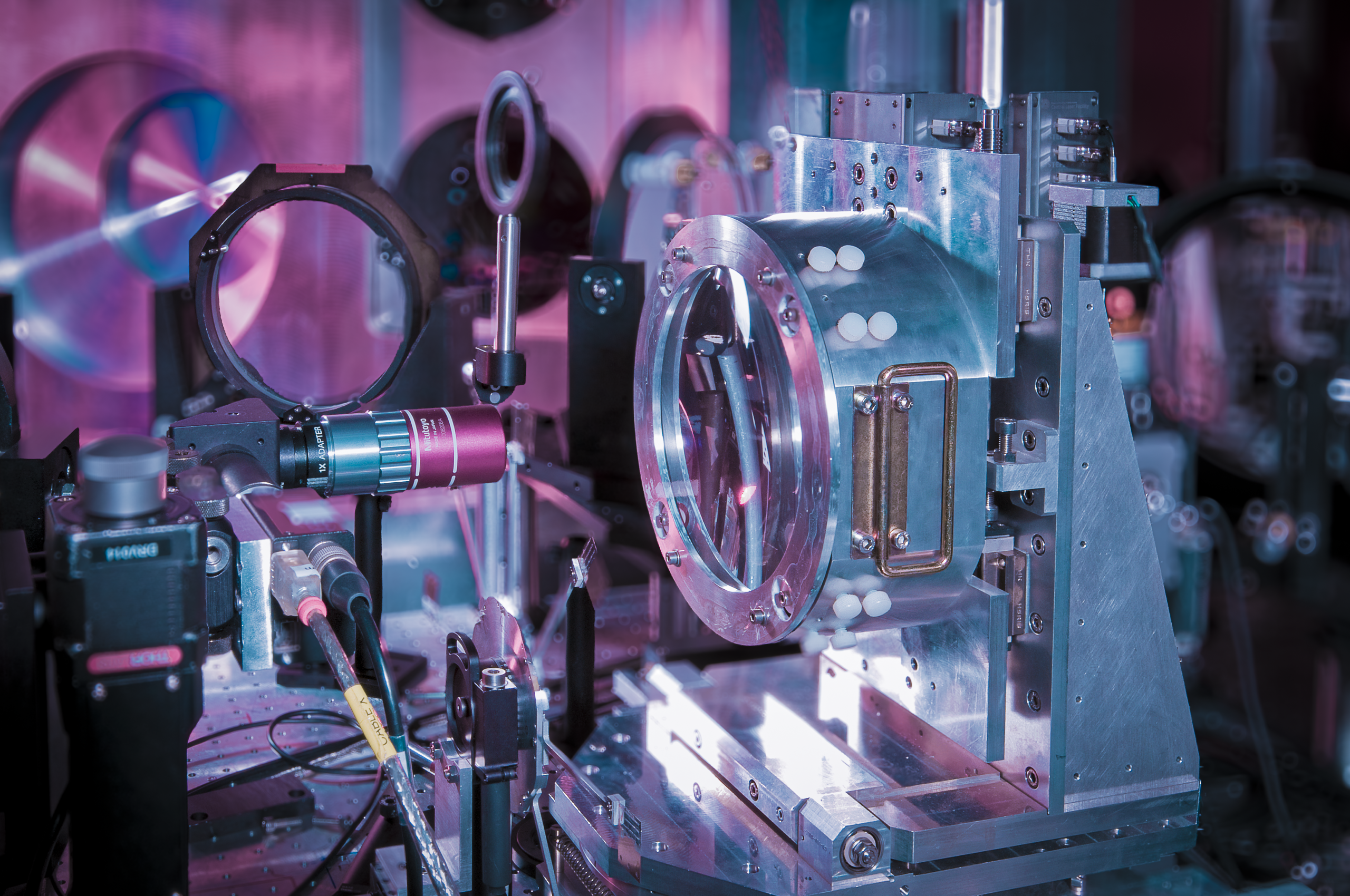
Research continued with the successful demonstration of the technique at large aperture consistent with PW-level performance, funded by an EPSRC grant.
Over the past decade, much of the focus has been on the research of key technologies to enable the design of high power lasers based solely on OPCPA amplification.
Efforts have been put in to the modelling and testing of key components, such as non-linear crystals, gratings and broadband front-end schemes.
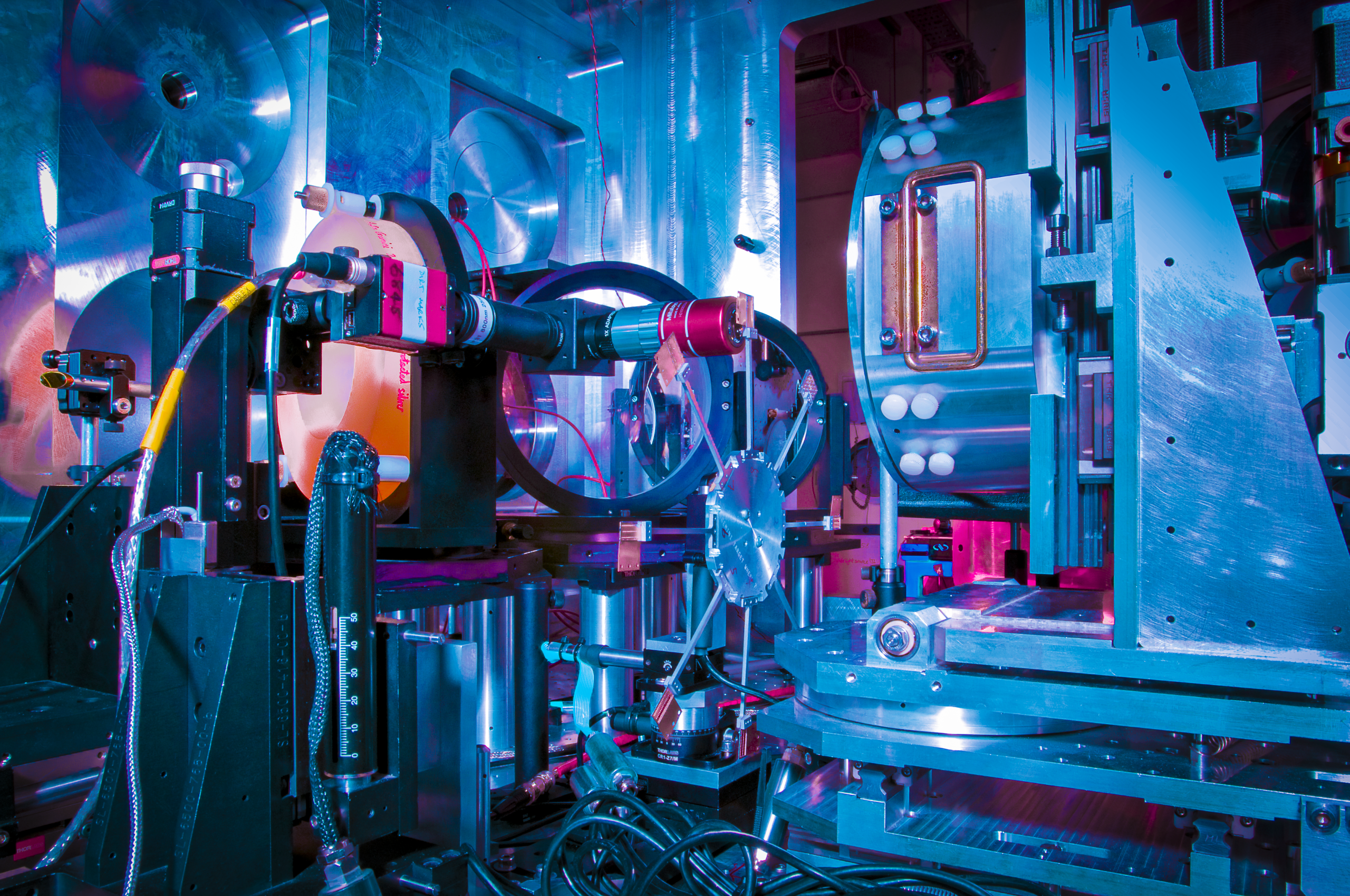
To take advantage of this novel technology, STFC funded the Vulcan OPCPA Petawatt Laser (VOPPEL) beamline.
VOPPEL was conceived as an additional capability for the user community and was designed to deliver 30J in 30fs to the existing Vulcan PW Target Area. VOPPEL will now be housed in the new Vulcan 20-20 building and delivered as an additional capability as part of this major upgrade.